




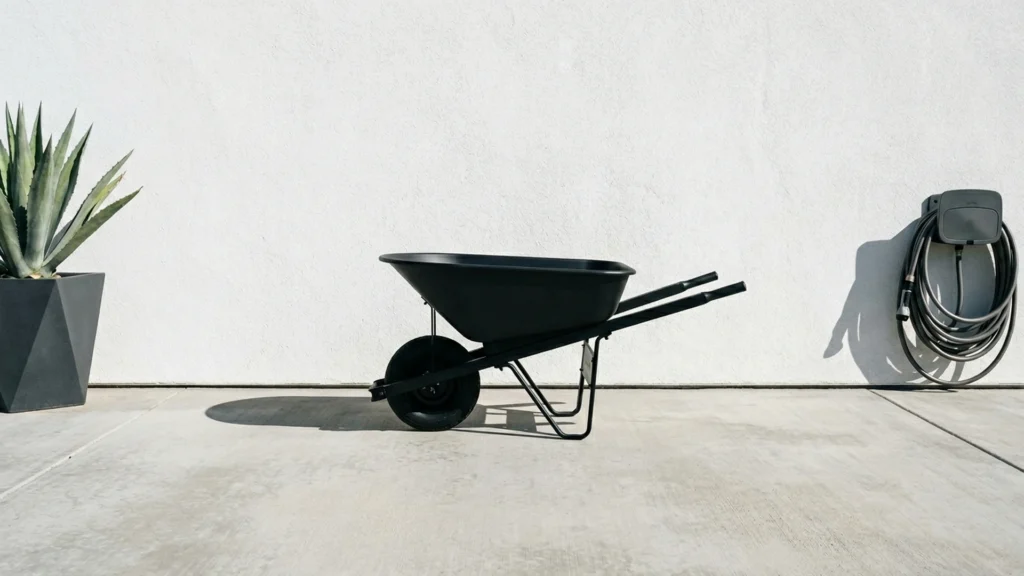
Wheelbarrows move soil, mulch, gravel, and construction debris from point A to point B. They also dump the load right where you want it, without lifting every bag by hand. In this category, the differences show up under weight and on rough ground, not in the product photos.
Picking one can feel tricky because key specs get oversold. A big tray can look roomy but still feel awkward when the load shifts. High max load numbers do not always match real-world stability. Tire type matters more than it sounds, because pneumatic tires handle bumps differently than flat-free or solid rubber. Handle shape and tray material also change how hard it feels to steer, lift the front, and dump.
This guide narrows the field to the wheelbarrows most suited to common jobs. You will learn what to check, how each design choice affects control, and which model type fits your terrain and workload. The goal is simple, match the right capacity and steering comfort to the work you plan to do.
Quick Overview
Top Picks
Best Overall

Specifications
| Brand | A.M. Leonard |
|---|---|
| Tray Capacity | 6 cu ft |
| Max Load Capacity | 500 lb |
| Wheel Diameter | 16 in |
| Wheel Tire Type | Flat-Free |
| Tray Material | Steel |
| Product Weight | 70.5 lb |
Pros
- Stable, smooth dumping
- Sturdy tray, solid welds
- Rolls well on rough ground
Cons
- Heavy wheelbarrow
- Harsher ride
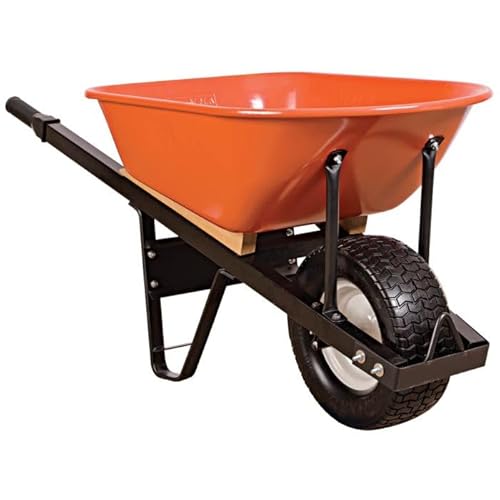
This 6-cu ft landscaper wheelbarrow earns the Best Overall spot for its stable, predictable loading and dumping. The standout trait is how smoothly it tips and empties without feeling off-balance, even when you are moving mixed debris and yard waste.
In real use, the steel tray with solid welds holds up well and carries loads without flexing much. With a 500 lb max load rating and 16 in flat-free tires, it rolls more easily over gravel, mulch, and rough paths. It also dumps smoothly, which helps when you are relocating material in small sections.
The main trade-off is weight, at 70.5 lb, which can make carry-and-lift moments more tiring. Expect a harsher ride over uneven ground than lighter options. If you want a durable, steady workhorse for regular landscaping or cleanup, this is a strong fit.
Also ranked #1 in: Wheelbarrows with Flat Free Tires · 6-Cubic-Foot Wheelbarrows
Best with Pneumatic Tires

Specifications
| Brand | Gorilla Carts |
|---|---|
| Tray Capacity | 6 cu ft |
| Max Load Capacity | 1200 lb |
| Number Of Wheels | 4 |
| Wheel Diameter | 13 in |
| Wheel Tire Type | Pneumatic |
| Tray Material | Polyethylene |
| Product Weight | 54 lb |
Pros
- Stable, smooth dumping
- High load capacity
- Large tray volume
Cons
- Valve stem leaks
With pneumatic tires, the Gorilla Carts GOR6PS is a strong fit for the Best with Pneumatic Tires role. The 13-inch pneumatic wheel helps it roll smoothly over uneven ground like gravel and mulch. It also keeps the ride controlled when you are moving a heavy load to the dump spot.
Performance is a standout for this model. The 6 cu ft polyethylene tray gives real working space, and the 1200 lb max load rating supports big jobs without feeling like it is struggling. Stability during dumping also ranks high, thanks to a design that stays steady when you tip the tray. Maneuvering feels easier than many single-wheel options because it uses 4 wheels.
The main downside is a valve stem leak, which can turn into extra maintenance if it is not addressed. If you move lots of dirt, debris, or landscaping materials and want pneumatic traction with a roomy dump tray, this is a solid choice. Choose it if you are ready to watch tire maintenance and fix small air leaks early.
Also ranked #1 in: 4-Wheel Wheelbarrows · Wheelbarrows with Dumping
Best Dual-Wheel

Specifications
| Brand | WORX |
|---|---|
| Max Load Capacity | 300 lb |
| Number Of Wheels | 2 |
| Wheel Tire Type | Flat-Free |
| Product Weight | 40.8 lb |
Pros
- Sturdy tray, solid welds
- Stable, smooth dumping
- High load capacity
Cons
- Harsher ride
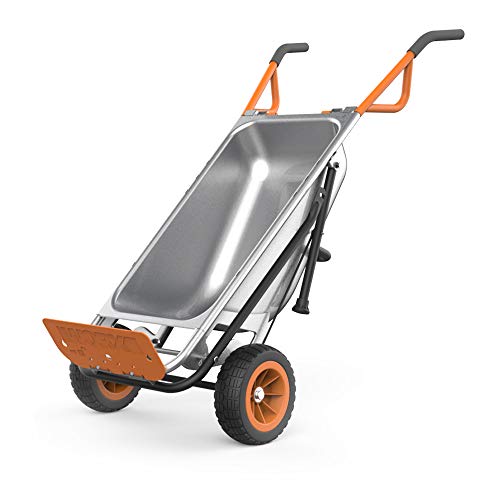
This dual-wheel WORX WG050 Aerocart fits the Best Dual-Wheel role because it keeps loads steadier than single-wheel designs. The two-wheel setup helps the cart track straight and dump with less wobble, even when you load up with yard waste or jobsite debris.
In real use, it handles heavy loads well, with a 300 lb max load rating and a sturdy tray with solid welds. Ditching and dumping feel smooth and consistent, which matters when you are moving mulch, gravel, or mixed material. Build quality also holds up better than many entry options, so it does not feel flimsy when the tray is full.
The main drawback is ride comfort. It can feel harsher on rough, bumpy ground, so long pushes over uneven terrain may wear you out. If you want a stable dual-wheel wheelbarrow for frequent hauling and cleaner dumping, this is the one to get, especially for heavier loads and less tipping risk.
Best Lightweight

Specifications
| Brand | A.M. Leonard |
|---|---|
| Tray Capacity | 6 cu ft |
| Max Load Capacity | 500 lb |
| Wheel Tire Type | Pneumatic |
| Tray Material | Plastic |
| Product Weight | 65 lb |
Pros
- Sturdy tray, solid welds
- Balanced and low-effort
- Great capacity for price
Cons
- Grip geometry unknown
- Wheel size unspecified
This A.M. Leonard WB6 wheelbarrow fits the Best Lightweight slot because it keeps the weight down while still handling real yard and jobsite loads. The standout trait is its big 6 cu ft poly tray, matched with a manageable build weight of 65 lb. That combo makes it easier to load, move, and empty than many heavier tubs.
The tray and frame feel solid when you work. Welds and the overall build come across as dependable, which matters when you carry mixed materials like mulch, gravel, or construction debris. It also rates well for performance because the balance stays steady through the push and dump, and the max load capacity is 500 lb. The pneumatic tire helps roll over uneven ground with less effort than smaller, firmer wheels.
The main drawback is that some key details are unclear, including wheel size and the grip geometry on the handles. If you want a 6 cu ft wheelbarrow that stays easier to handle without giving up serious carry capacity, this is a strong pick for homeowners and light-to-midrange jobsite users who work often but do not want extra weight to wrestle with.
Best Value

Specifications
| Brand | Best Choice Products |
|---|---|
| Max Load Capacity | 500 lb |
| Number Of Wheels | 2 |
| Wheel Diameter | 16 in |
| Wheel Tire Type | Pneumatic |
| Tray Material | Polyethylene |
| Product Weight | 33.5 lb |
Pros
- Great capacity for price
- More stable design
- Smoother ride
Cons
- Missing tray size data
- Unverified dumping efficiency
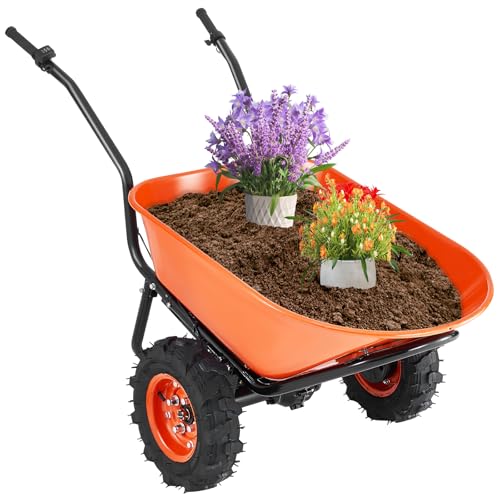
This dual-wheel Best Choice Products SKY10572 fits the Best Value role because it focuses on steadier hauling and a high 500-lb max load rating for everyday yard and jobsite work. Two pneumatic tires help keep the load balanced when you move over uneven ground.
In real use, the stability stands out, especially when the tray is full. The polyethylene tray is built for regular dumping and cleanup, and the larger 16 in pneumatic wheels help it roll with less effort than single-wheel designs. Ergonomics are also solid, with a lighter overall weight of 33.5 lb that makes it easier to lift and reset compared with heavier shop models.
The main drawback is that tray size is not clearly listed, so it is harder to judge how much fits before you hit the 500-lb limit. Dump performance is also not fully verified. If you need a stable, easy-to-move wheelbarrow for mulch, gravel, or construction debris and you want confidence in the load rating, this is a practical pick.
Best for Tight Spaces

Specifications
| Brand | Allsop |
|---|---|
| Tray Capacity | 6 cu ft |
| Number Of Wheels | 1 |
| Wheel Diameter | 3 in |
| Wheel Tire Type | Pneumatic |
| Handle Style | Straight |
| Product Weight | 22.6 lb |
Pros
- Sturdy tray, solid welds
- Balanced and low-effort
- Great capacity for price
Cons
- Less comfortable control
This folding wheelbarrow is a smart fit for tight spaces because it is built to pack down when you are done. The single 3 in pneumatic wheel also helps it move through narrow paths without needing extra clearance.
In day to day use, the tray feels sturdy, with solid welds that hold up when you are loading and dumping. The 6 cu ft tray gives you solid carrying space for yard work and cleanup jobs. It also stays balanced and uses low effort to push, so you can keep working even when the load is a bit heavy.
The trade-off is control. Some people will find the straight handle less comfortable to manage over long pushes. If you want a foldable, single-wheel wheelbarrow for sheds, small yards, and quick dump jobs, this is a good match as long as comfort is not your top priority.
Best Electric

Specifications
| Brand | VEVOR |
|---|---|
| Tray Capacity | 4.5 cu ft |
| Max Load Capacity | 573 lb |
| Number Of Wheels | 2 |
| Wheel Diameter | 16 in |
| Product Weight | 114.6 lb |
Pros
- High load capacity
- More stable design
Cons
- Some wrist strain
- Terrain-dependent performance
As a Best Electric pick, the VEVOR EWB9800 is built around ease under load, thanks to its high max load rating of 573 lb. In practice, that stability matters when you are moving heavy yard waste or jobsite debris and still need predictable dump control.
Its 4.5 cu ft tray gives you more usable space per trip, so you spend less time reloading. Two 16 in wheels also help keep the load balanced, which is a big part of why it scores well for real-world performance and stability. The main drawback is ergonomics, since some users report wrist strain when pushing and dumping, especially when the tray is full.
Handling can also be terrain dependent, so expect better results on smoother surfaces than deep, uneven ruts. If you need an electric wheelbarrow for heavy, frequent loads and you can work on reasonably passable ground, this one fits well.
Best for Hydraulic Dumping

Specifications
| Brand | MechMaxx |
|---|---|
| Tray Capacity | 8.2 cu ft |
| Max Load Capacity | 1500 lb |
| Wheel Tire Type | Flat-Free |
Pros
- High load capacity
- Large tray volume
- Hydraulic assist dumping
Cons
- Stability info missing
- Harsher ride
- Some wrist strain
This electric dumper wheelbarrow fits the Best for Hydraulic Dumping role because it uses hydraulic assist to flip the load fast and with less push force. When you need to dump soil, gravel, mulch, or debris in a tight work zone, that dump motion matters. It helps you move material without fighting the front end every time.
It also brings real carrying capacity to the job. The tray holds 8.2 cu ft, and the max load rating is 1500 lb, so it is built for heavier loads than a basic garden cart. With flat-free wheels, you do not have to worry about air pressure, which helps on rough ground and repeated trips. The build scores land solid, helped by a design aimed at handling weight without feeling overly light.
The main trade-off is comfort. The ride feels harsher, and some users may notice wrist strain during steering and dumping. Stability details are also not clear, so you will want to practice the dump angle and footing before working at full load. If you often need quick, hydraulic dumping for heavy material and want flat-free mobility without upkeep, this is a strong pick.
What to Look For
Tray Capacity: Choose the tray size based on how you pack material. A larger tray reduces trips, but it also increases how heavy the load feels when full. Look for a capacity that matches your typical loads, not the biggest one you might do once.
Max Load Capacity: Use the max load rating as a ceiling, not a target. For frequent hauling, a higher rating usually means more confidence in the frame and tray. If you often carry heavy mixes, do not size down just to save money or weight.
Wheel Count: A single-wheel model turns quickly, but it depends on balance. Dual-wheel designs spread weight and can feel steadier when the tray is loaded. If you work on uneven ground, dual wheels often reduce the wobble that tires and loads create.
Wheel Diameter: Larger wheels roll over small bumps with less effort. This helps on gravel, compacted soil, and rough mulch. If you mostly move across flat surfaces, diameter matters less, but it still affects how smooth the push feels.
Wheel/Tire Type: Match tires to your ground. Pneumatic tires grip well and absorb impacts, which helps on uneven sites. Flat-free tires aim to reduce punctures while still rolling decently. Solid rubber and foam-filled setups avoid flats but can feel firmer and rougher on hard bumps.
Tray Material: Tray material affects both weight and corrosion resistance. Steel trays tend to be strong and durable, but they can rust if coatings fail. Polyethylene and plastic trays resist rust and tend to be lighter, which can make lifting and steering easier.
Handle Style: Handle shape changes control during pushing and dumping. Loop handles work well for a firm two-hand grip and smooth steering. Straight handles can feel simpler for users who push with a steady arm position. D-grip styles can improve comfort for some people, especially when the wheelbarrow needs frequent lifting at the front.
Product Weight: Consider how often you carry the wheelbarrow up steps, through doors, or across a storage area. A heavier unit can be harder to reposition, even if it performs better under load. For smaller jobs or shared spaces, a lighter model can save effort every time you set it down.
How We Selected These Products
Products were found through broad web searches across review sites, buyer forums, and best-of lists for wheelbarrows. This helped catch models that show up in real discussions, not just brand pages.
A large set of customer reviews was read for patterns. I focused on recurring problems, like tipping when loaded, tires going flat or feeling slow, tray warping, and handles that feel hard to hold during dumping.
Finally, specs and availability were verified directly against Amazon listings. Each wheelbarrow was scored across the same pillar set, then the final picks were curated to match distinct roles, like pneumatic-tire users, dual-wheel stability needs, tight-space storage, lightweight lifting, and electric or hydraulic dumping where those features actually change the job.
Frequently Asked Questions
Which wheelbarrow is best for hauling heavy yard debris?
If you carry heavy mulch, gravel, or construction debris often, pick a wheelbarrow rated for at least 500 lb. In this lineup, the A.M. Leonard WBST6-P Landscaper 6-cu ft Wheelbarrow stands out with a 500 lb max load and a large 6 cu ft tray. A higher capacity helps you move more per trip, which reduces fatigue.
What is the biggest difference between pneumatic tires and flat-free tires?
Pneumatic tires use air, so they absorb bumps better on gravel and uneven ground. Flat-free and foam-filled tires avoid punctures, but they may feel firmer than air tires. For rough yards, pneumatic tires often roll smoother, while flat-free tires trade comfort for lower maintenance.
How do dual-wheel wheelbarrows change handling compared with single-wheel models?
Dual-wheel designs usually feel more stable when loaded, especially on slopes and uneven ground. They can also reduce wobble, so steering feels easier during dump and turn moves. Models like WORX WG050 Aerocart 8-in-1 Wheelbarrow and Best Choice Products SKY10572 Dual-Wheel 500-lb Wheelbarrow generally score well on stability and control.
Is a higher price always better for wheelbarrows?
Not always. Some premium picks score well because of real engineering, like better load handling or stronger build elements. But value scores can stay high on mid-priced options, since they deliver strong capacity and easier maneuvering without the highest price tag.
Why do many wheelbarrows score lower on ergonomics?
Ergonomics depends on handle comfort, balance, and how easy it is to dump without strain. In the scored set, many products lack detailed comfort feedback, so ratings stay capped. Also, heavier wheelbarrows and single-wheel layouts can increase push and lift effort for some users.
What should I do to maintain my wheelbarrow tires and wheels?
For pneumatic tires, check pressure regularly and look for slow leaks. For flat-free, foam-filled, or solid setups, inspect the wheel for cracks and make sure fasteners stay tight. Also, keep bearings clean and lubricated if the design allows it, since smooth rolling matters on gravel and mulch.


