




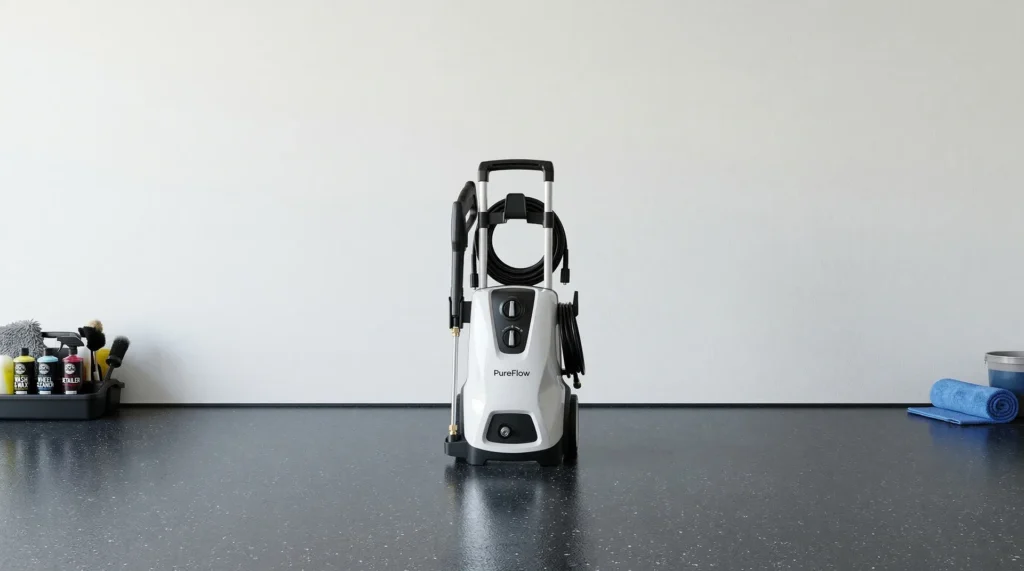
Choosing the right pressure washer shouldn’t feel like deciphering a foreign language. Between PSI, GPM, electric versus gas, nozzles, and all the marketing claims, it’s easy to get overwhelmed — and nobody wants to buy something that breaks down after a few uses. We get that. That’s why we’re committed to making your decision straightforward and stress-free by cutting through the noise and focusing on what really matters: performance, reliability, and value.
To build recommendations you can trust, we analyzed thousands of real customer reviews and put product specifications head-to-head to see how each model stacks up in everyday use. We look beyond glossy specs and marketing copy: how does a machine perform on stubborn deck stains, how easy is it to start and maneuver, are replacement parts readily available, and do users report consistent long-term reliability? We also weigh practical factors like warranty support, included accessories, noise levels, and overall cost of ownership. The result is a curated list of pressure washers that deliver solid real-world results, not just impressive numbers on paper. We update our findings regularly to reflect new models and evolving user feedback, so you’re getting timely, high-quality recommendations. Whether you need a compact electric cleaner for occasional patio touch-ups or a heavy-duty gas unit for regular, demanding jobs, we’re here to help you find the best match for your needs — saving you time, money, and the frustration of a poor purchase.
Quick Overview
Top Picks
Best Gas Powered

Specifications
| Brand | Westinghouse |
|---|---|
| Power Source | Gas Powered |
| Hose Length | 25 Feet |
| Tank Volume | 0.5 Gallons |
| Maximum Pressure | 3400 PSI |
| Dimensions | 21.7"L x 20.3"W x 23.4"H |
| Weight | 63 Pounds |
Pros
Cons
The Westinghouse WPX3400 delivers impressive cleaning power for a homeowner-grade gas washer — 3400 PSI and 2.6 GPM make quick work of decks, siding, driveways and patio furniture. I like that it comes ready to run with a 1-gallon easy-fill gas tank, a half-gallon onboard soap reservoir, a 25-foot abrasion-resistant hose and five quick-connect nozzles so you can switch cleaning angles fast. The 212cc OHV engine and maintenance-free axial cam pump give reliable, consistent pressure for routine deep-cleaning jobs.
Build and portability are solid: a sturdy steel frame, 12" never-flat wheels and included tools/engine oil mean you can move it and get started without hunting for accessories. It accepts common M22 accessories like surface cleaners and foam cannons, and Westinghouse backs it with a 3-year limited warranty. A couple of mid-range notes — the 2.6 GPM and axial cam pump are great for homeowners but not as heavy-duty as commercial triplex setups, and new units may carry a faint factory oil/fuel smell. Overall, a dependable pick for most residential needs.
Best Electric

Specifications
| Brand | Sun Joe |
|---|---|
| Power Source | Corded Electric |
| Hose Length | 20 Feet |
| Tank Volume | 1.65 Gallons |
| Maximum Pressure | 2600 PSI |
| Dimensions | 16"L x 14"W x 34"H |
| Weight | 28.4 Pounds |
Pros
Cons
If you want an electric pressure washer that feels like it means business, the Sun Joe SPX3000 delivers. Its 14.9-amp motor provides surprising bite for an electric unit, blasting away road grime, mildew, and built-up gunk on cars, siding, decks, and outdoor furniture. The four quick-connect spray tips let you tailor the stream from a focused jet for stubborn spots to a wider fan for rinsing, and the soap applicator makes pre-treating a breeze — those features are exactly why it ranks well among the best electric washers.
The included accessories — a 34-inch extension wand, 20-foot high-pressure hose, and a long 35-foot GFCI power cord — make setup and reach easy right out of the box. The Total Stop System is a nice safety and longevity touch, shutting the pump off when you release the trigger. It’s not the lightest or most premium-feeling machine in construction, but for power, versatility, and value, it’s hard to beat in its class.
Best Powerful

Specifications
| Brand | SIMPSON |
|---|---|
| Power Source | Gas Powered |
| Hose Length | 50 Feet |
| Tank Volume | 1.61 Gallons |
| Maximum Pressure | 4200 PSI |
| Dimensions | 8"L x 3"W x 50"H |
| Weight | 141 Pounds |
Pros
Cons
What makes the Simpson 4200 PSI stand out in the "Best Powerful" category is its no-nonsense, professional build. The Honda GX390 engine coupled with a AAA industrial triplex plunger pump delivers a consistent 4200 PSI at 4.0 GPM, so it chews through heavy-duty tasks like deck stripping, wood restoration, and paint prep with confidence. Thermal relief on the pump is a nice touch to prevent overheating during long runs.
It’s also thoughtfully packaged for job-site use: a welded steel frame with powder coat resists corrosion, and beefy 13-inch pneumatic tires make it surprisingly easy to move over rough ground. The included Monster hose, five quick-connect nozzles, and an ergonomic spray gun mean you’re ready to work out of the box. Assembly and starting are straightforward, which contractors will appreciate.
On the average side, it’s a typical industrial unit in weight and footprint, and remember the fuel-fill guidance and 49-state compliance. Overall, a robust, reliable choice when raw power is the priority.
Best Compact

Specifications
| Brand | Adam's Polishes |
|---|---|
| Power Source | Corded Electric |
| Hose Length | 40 Feet |
| Tank Volume | 1.2 Gallons |
| Maximum Pressure | 2500 PSI |
| Dimensions | 24"L x 16"W x 17"H |
| Weight | 12 Pounds |
Pros
Cons
Adam’s Compact pressure washer proves that portability doesn’t have to mean weak performance. With a peak of 1500 PSI and a steady 1350 PSI at 1.2 GPM, it delivers plenty of cleaning oomph for car detailing, decks, and siding without taking up much space. Its small footprint and light weight make it easy to store on a shelf or wheel out to the driveway, so you get professional-level results without hauling a bulky unit around.
What pushes it into the “Best Compact” category is the thoughtful build: a 40-foot hose for reach, a 35-foot cord with a built-in GFCI for safety, and a metal quick-disconnect that plays nicely with most foam cannons and accessories. The inlet mesh filter helps avoid clogs, too. It’s not a commercial-grade washer — the 1.2 GPM and sub-2000 PSI limit heavier jobs — but for detailing and routine home cleaning it’s durable, convenient, and backed by a solid satisfaction guarantee.
Best For Home Use

Specifications
| Brand | Kärcher |
|---|---|
| Power Source | Corded Electric |
| Hose Length | 25 Feet |
| Tank Volume | 1.4 Gallons |
| Maximum Pressure | 2000 PSI |
| Dimensions | 34.33"L x 13.07"W x 16.77"H |
| Weight | 32 Pounds |
Pros
Cons
If you want a pressure washer that feels built to last and makes weekend cleanup easier, the Karcher K5 is an excellent home-use choice. Its water-cooled brushless induction motor and non-corrosive N‑COR pump promise longer life than typical universal-motor models, and the combination of a Vario Power wand for gentle cleaning plus a patented Dirt Blaster for stubborn grime gives you real control across surfaces like driveways, decks, cars and RVs. The 25-foot kink-resistant hose and onboard pressurized hose reel make setup and storage painless, while the removable detergent tank and adjustable flow dial let you dial in soap without fuss.
A few things are simply average: 2000 PSI at 1.43 GPM is perfectly adequate for most homeowners but not in the professional-powerballpark, and features like an onboard detergent reservoir are common at this price point. Overall, the K5 strikes a nice balance of durability, convenience, and cleaning power, which is why it ranks so highly for everyday household jobs.
Best Budget-Friendly

Specifications
| Brand | Greenworks |
|---|---|
| Power Source | Corded Electric |
| Hose Length | 20 Feet |
| Tank Volume | 1.2 Gallons |
| Maximum Pressure | 1500 PSI |
| Dimensions | 18.5"L x 10.28"W x 8.74"H |
| Weight | 11.98 Pounds |
Pros
Cons
If you’re after a dependable, no-fuss cleaner that won’t break the bank, the Greenworks 1500 PSI is exactly that kind of bargain. Its 1500 PSI and 1.2 GPM combo is well-suited for patios, cars, deck furniture and siding—powerful enough to blast through everyday grime but gentle compared with heavier-duty gas models. Practical touches like the 20-foot pressure hose and generous 35-foot power cord with an inline GFCI make setup and reach surprisingly easy, and the option to use the unit vertically or horizontally gives it extra stability on uneven ground.
Where this washer really earns its spot in a budget list is in the included accessories and peace-of-mind features: two nozzle tips, a soap applicator with attachable detergent bottle, PWMA certification and a three-year warranty. It’s not for stripping stubborn paint or industrial jobs, but for regular home maintenance it’s a great value—simple, safe, and thoughtfully equipped for the price.
What To Look For
Picking the right pressure washer comes down to matching power, features, and durability to the jobs you plan to tackle, so knowing what matters helps you avoid overspending or choosing something underpowered.
- Pressure (PSI): PSI determines cleaning force; higher PSI strips tougher grime but can damage delicate surfaces, so match pressure to the task.
- Flow Rate (GPM): Gallons per minute affect how quickly surfaces are rinsed; higher GPM plus adequate PSI equals faster cleaning for larger jobs.
- Power Source: Electric models are quieter, lighter, and lower maintenance while gas units deliver more power and mobility for heavy-duty or remote work.
- Pump Type and Durability: Axial cam pumps are common for homeowners and cheaper to replace, while triplex pumps offer longer life and better performance for frequent use.
- Nozzles and Pressure Control: Interchangeable nozzles and adjustable pressure or a variable spray wand let you tailor the spray pattern and strength to different surfaces safely.
- Hose Length and Quality: Longer, kink-resistant hoses increase reach and convenience, but quality matters to avoid leaks and pressure loss over distance.
- Portability and Storage: Consider weight, wheel design, and compactness if you’ll move the machine often or need to store it in a tight space.
- Detergent System and Accessories: Onboard tanks or siphon hookups and included accessories like surface cleaners, extension wands, and turbo nozzles expand capabilities and value.
- Safety and Electrical Features: Look for GFCI protection on electric units, a reliable trigger lock, and clear safety labels to reduce accident risk.
- Warranty and Service Support: A good warranty and accessible customer service or replacement parts give confidence, especially for higher-cost or commercial models.
Prioritize the combination of PSI/GPM, power type, durability, and useful accessories to find a pressure washer that handles your typical jobs efficiently and safely.
How We Select Our Products
Picking the pressure washers we recommend wasn’t random — it was a careful, repeatable process designed to give you trustworthy, useful choices. We started by gathering a broad pool: best-sellers, highly rated models across major retailers, and respected brands. From there we used a multi-step filter that blends data with hands-on observation so recommendations aren’t based on a single metric.
Customer ratings and review analysis play a big role. We read hundreds of reviews, looking for consistent praise or recurring complaints rather than one-off opinions. Positive patterns around reliability, ease of use, and real-world cleaning power counted heavily; frequent mentions of failures, hard-to-find parts, or poor support were red flags. We also cross-referenced professional reviews to catch issues consumers might not report right away.
Feature and spec comparison helped us level the playing field: PSI and GPM (how hard and how much water), nozzle options, hose length, pump type (axial vs. triplex), portability and storage, and included accessories. We verified manufacturer claims where possible and noted build quality, noise level, and safety features. Value-for-money wasn’t just price — we evaluated longevity, warranty coverage, and availability of replacement parts to estimate true cost over time.
Finally, everything was scored against a consistent rubric and double-checked for balance: a powerful machine that’s temperamental scores lower than a slightly less powerful but dependable unit. Our goal is simple — save you time and money by recommending pressure washers that perform well in the real world, backed by careful research and honest judgment.
Final Thoughts
Picking the right pressure washer does more than make a chore easier — it tailors the machine’s power and features to the job, so you get better results faster and with less hassle. The biggest immediate benefit is efficiency: the right PSI and GPM combination blasts away grime on driveways, decks, or siding without you spending hours scrubbing. That saves time and spares your back.
Matching a washer to your needs also protects surfaces. A lightweight electric model with adjustable nozzle settings can clean a patio or car gently, while a higher-PSI gas unit tackles concrete and stubborn stains. Choosing correctly helps avoid damage from too much pressure and reduces the chance you’ll need costly repairs or replacements. Versatility is another win—you can pick a unit with useful attachments and detergent compatibility so one machine handles multiple tasks, from washing outdoor furniture to prepping for paint.
There are practical, long-term advantages too. The suitable pressure washer can be more water- and energy-efficient for your tasks, lowering operating costs. It improves safety by minimizing risky ladder work or aggressive manual scraping, and reliable models with good warranties will cut down on maintenance headaches. Portability and storage options make day-to-day use simpler, while a well-chosen unit keeps its value if you decide to sell later.
Before buying, think about what you’ll clean most often, how much power you actually need, and whether electric or gas fits your lifestyle. Read user feedback, compare specs, and—if possible—test or rent a model. Making an informed choice means less frustration and more satisfying, long-lasting results.


