





Ice Skate Sharpening: What to Check Before Your First Skate
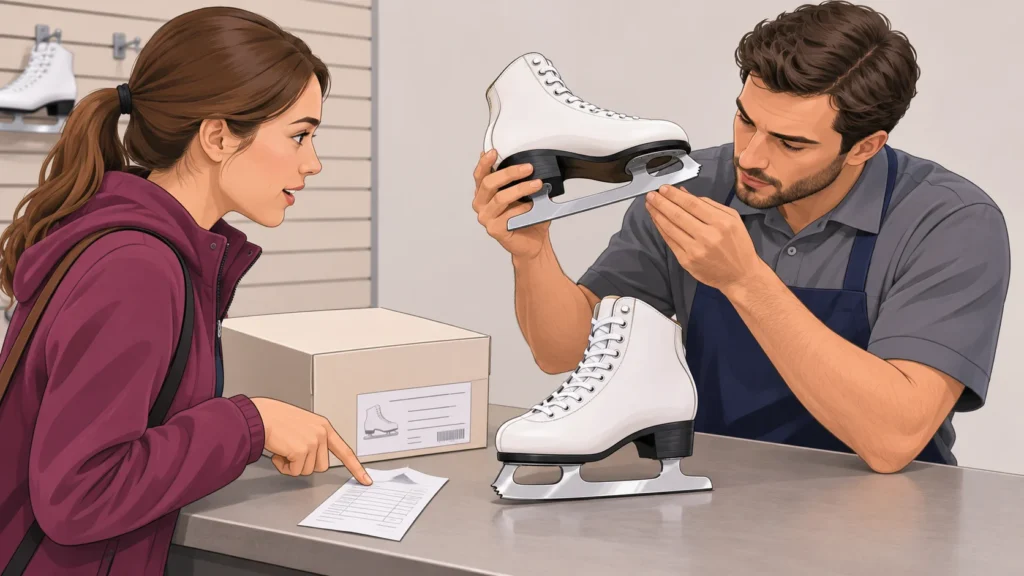
A new pair of ice skates is not automatically ready for the ice. Some models are sold with blades sharpened at the factory; for others, sharpening status may be unclear. Before your first session, confirm what has been done rather than guessing from the skate’s appearance. The goal is simple: know the blade’s status and get a qualified shop’s advice if you cannot verify it.
This guide is about that first-use decision, not choosing a skate. For broad model comparisons, see TheTopZone’s men’s ice skate Top Picks. Even within a model range, check the information for the exact skate you bought: sharpening details can differ.
Why check sharpening status?
“New” does not tell you whether a blade has been sharpened. As one specific example, K2 describes the F.I.T. Ice BOA men’s skate as having pre-sharpened stainless-steel blades. That supports a claim about that model—not every K2 skate, or new skates generally. Check the product page or paperwork for your exact model, and ask the retailer if the information is missing. K2’s product page for the F.I.T. Ice BOA
For a beginner, relying on a glance at the blade is not a dependable substitute for confirming its sharpening history. The beginner skating guide from wikiHow advises making sure skate blades are sharpened before going onto the ice. If you do not know whether yours are, pause and ask the seller or a skate shop rather than treating the first session as a test. wikiHow’s beginner ice-skating guide
A practical first-use check
- Find the exact model and version. Look at the box, receipt, product label, or the retailer’s listing. A broad description such as “recreational skates” is not enough to verify sharpening status.
- Look for explicit wording. Search the manufacturer’s product page or included paperwork for “pre-sharpened,” “factory sharpened,” or a clear statement that sharpening is included. If the listing says nothing, treat the status as unconfirmed—not as proof that the blades are dull or ready.
- Ask the seller what was done. If you bought the skates in person, ask whether the blades were sharpened before sale. If you ordered online, contact the retailer with the exact model and ask whether the pair shipped sharpened.
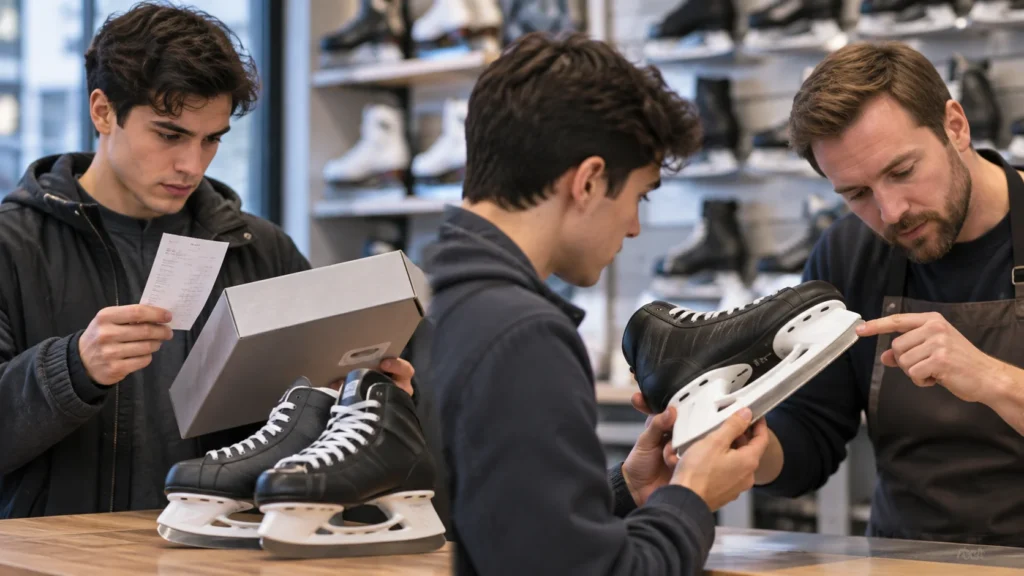
- Get a skate-shop opinion if the answer is still unclear. Take the skates in before your session. Explain that they are new and that you cannot confirm their sharpening history. Ask the shop to inspect them and tell you whether they recommend sharpening before use.
- Make a decision before stepping on the ice. If a reliable source confirms the blades are pre-sharpened, you may not need a first-use sharpening just because the skates are new. If status remains unknown, follow the shop’s advice or wait until you can verify it.
This process avoids two opposite guesses: assuming every new skate needs sharpening, and assuming every new skate is ready. A manufacturer statement applies to the model it describes; it does not settle the question for another model, a different version, or a pair that may have been handled or serviced since sale.
What to ask a skate shop
Be direct and give the staff the information they need. Bring the skates, and if available, the box, receipt, and product details. Useful questions include:
- “Can you check whether these blades have been sharpened?”
- “Based on this exact skate and how I plan to skate, do you recommend sharpening before my first session?”
- “If they need sharpening, what sharpening are you recommending, and why?”
- “Will you tell me when the work is complete and what was done?”
You do not need to select a technical specification from a menu if you are unfamiliar with the terms. Ask the shop to explain its recommendation in plain language, especially if you are a beginner. If you have a coach or a particular skating discipline, mention it so the shop can consider that context. The packet does not establish one sharpening choice that suits every skater, so avoid treating a recommendation for someone else’s skates as a universal rule.
Mistakes to avoid
- Assuming “new” means “sharpened.” Check the exact model’s documentation or ask the seller; the K2 example shows why a model-specific statement is useful, not universal.
- Assuming “not listed” means “not sharpened.” Missing information leaves the status unknown. Ask the retailer or a skate shop to check.
- Trying to judge the edge by touching it. Do not run fingers along a blade to test it. Let a skate-shop professional inspect it.
- Going onto the ice just to see how it feels. If you cannot confirm the blades are ready, resolve the question first. The beginner guide’s advice is to ensure blades are sharpened before skating.
- Applying one model’s instructions to another. A manufacturer’s statement about a particular pair does not certify other skates, including other models from the same brand.
There is a limit to what a first-use check can establish: a product page may describe how a model is supplied, but it cannot confirm the history of the individual pair in your hands. If the skates were bought used, the seller cannot confirm their condition, or the blades have been serviced since purchase, ask a shop to assess the actual blades rather than relying only on a general listing.
Illustrative example: a listing says “pre-sharpened”
Suppose you have new skates and find a manufacturer page for the exact model that explicitly says its blades are pre-sharpened. First, confirm that the page matches your model and version. Then ask the retailer whether your pair was supplied in that condition and whether it has been altered since. If the answers line up, you have a reasonable basis not to request sharpening solely because the skates are new. If the retailer cannot confirm the pair’s status—or the page is for a different model—take the skates to a shop before skating. This is a decision example, not a guarantee about every pair of that model.
Bottom line
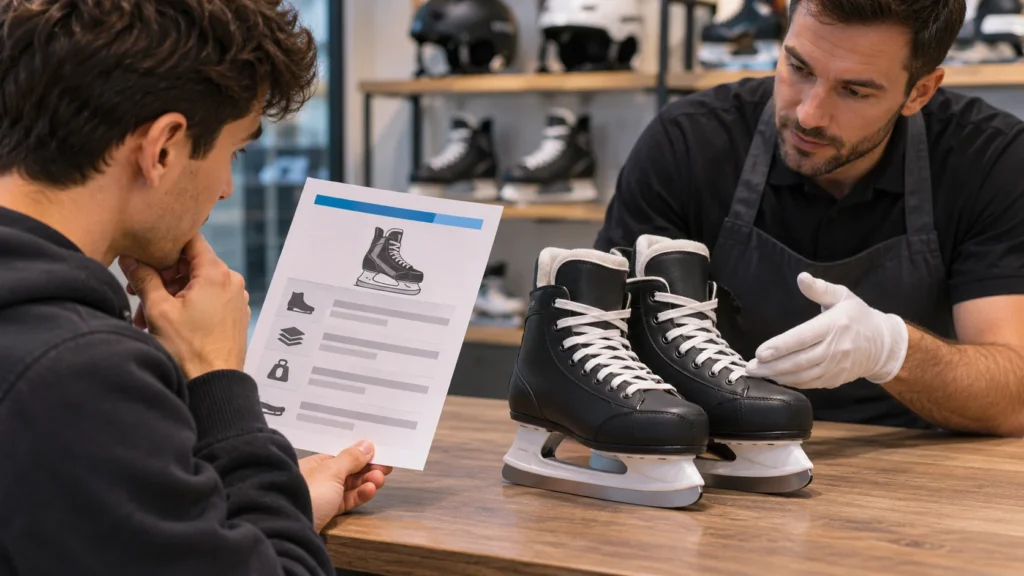
Before your first skate, verify the exact pair’s sharpening status through model-specific documentation, the retailer, or a skate shop. Treat unclear information as a reason to ask—not as a reason to guess. If you cannot confirm the blades are ready, get a professional inspection before using them. That small step gives you a clear next action without assuming that every new skate needs the same service.