





How to Use Dry Shampoo Without Chalky Residue
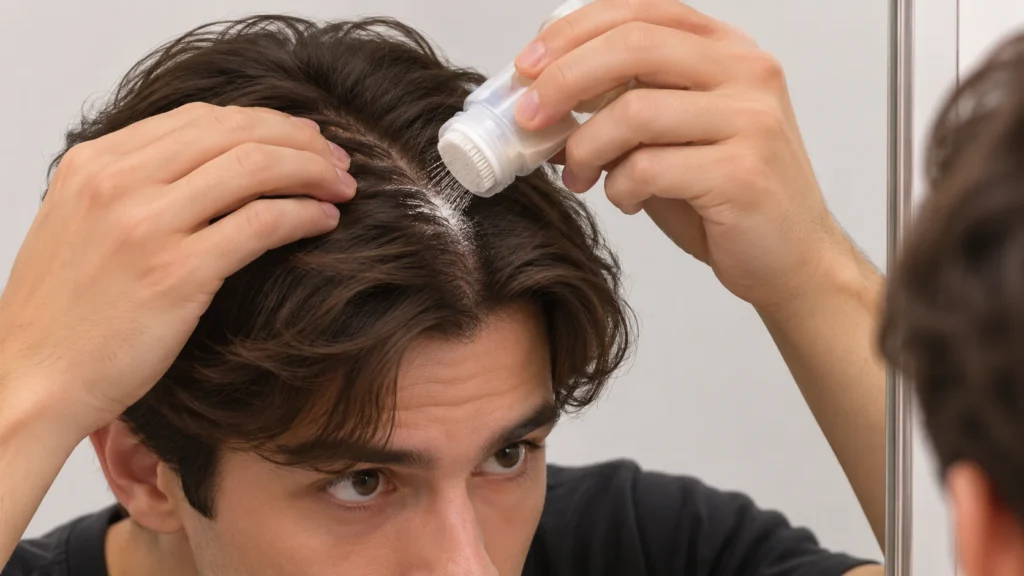
Powder dry shampoo is easiest to spot when it sits in one concentrated patch near the part. The goal is not to coat the whole head: place a little product at the roots that look oily, distribute it, and inspect before adding more. The right amount and finish vary with your hair, the dispenser and the product, so start conservatively and adjust in small steps. This guide is for powder formulas; spray products may have different directions.
Start with a small section
Begin with dry hair and identify the roots you actually want to refresh. Make a part, lift a narrow section, and apply a small amount close to the scalp rather than dusting the lengths. Move to another nearby section only if needed. Applying a little at a time lets you check the finish before treating more hair.
For loose powder, tap a little into your hand or use the applicator as directed on its packaging; avoid shaking out a large cloud over your head. Keep the product near the roots and away from your face. Dispensers and formulas differ, so the package directions take priority. If a dispenser is hard to control, you can try putting a little powder on your fingertips or a brush first, then placing it where needed.
Powder may be more noticeable against some hair colors, but how much shows depends on the product and how it is applied. Do not assume that a product described as suitable for all hair colors will disappear without blending. Try a small, less visible section first: apply a little, work it through, and check the result in ordinary light before treating more of your hair. If you can already see a pale patch, distribute or remove it before continuing.
Let it settle, then distribute
After applying the powder, pause briefly rather than brushing immediately. Then use your fingertips to gently work through the treated roots, moving across the section so the powder is not left in one spot. Follow with a brush or comb if that suits your hair and the product directions. wikiHow’s dry-shampoo advice also describes applying product at the roots and combing it through when needed to remove residue. Treat that as a general technique, not a replacement for the directions on your product.
Check the part, hairline and crown, where you are most likely to notice a concentrated patch. Use your fingers or a brush to move obvious excess through nearby roots. Avoid adding another layer just because a spot still looks oily at first glance: distribute what is already there, reassess, and add a small amount only if the roots still need it. The finish is more useful to judge after you have worked through the section than while powder remains in a single deposit.
Keep the lengths out of the process unless your product directions say otherwise. For this targeted refresh, the decision is based on which roots need attention, not on how much hair you can cover. If one side of the part looks fine, leave it alone. That limits unnecessary product and makes it easier to spot where any residue is coming from.
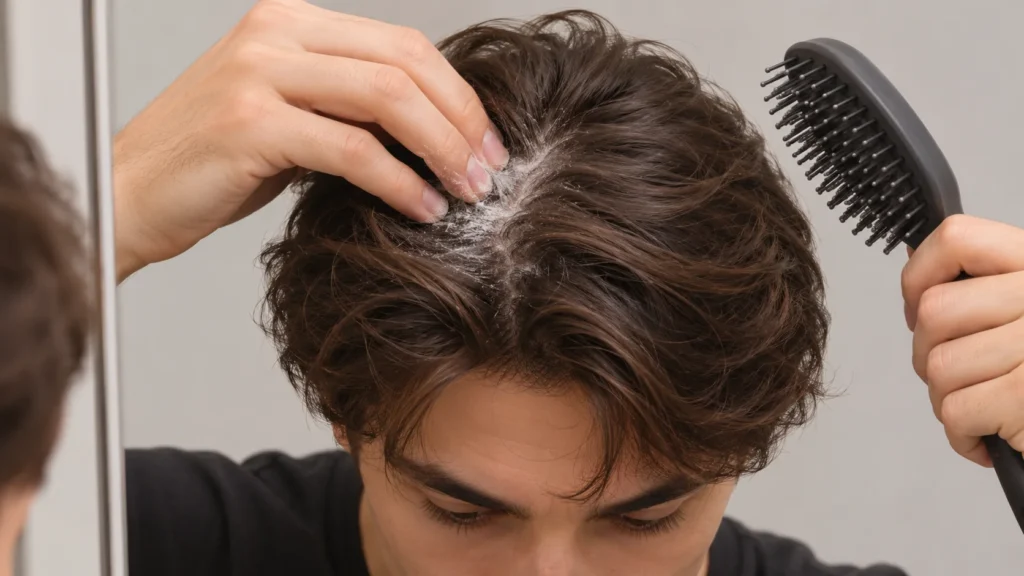
Remove visible residue without overworking
If you see a pale cast, first try blending the treated roots with your fingertips and brushing or combing through. Work gently and reassess from another angle in ordinary light. If a section still looks dusty, use a clean brush to lift away what you can. Avoid scrubbing hard or adding more powder to hide the first application; either can make it harder to judge the result.
If brushing does not resolve a small patch, you might try lightly dampening your fingertips and smoothing that area, provided the hairstyle and product allow it. Water can change the finish, so test a small spot rather than wetting the whole root area. This is a cautious troubleshooting option, not a manufacturer instruction in the sources here; skip it if you are unsure how your particular product or style will respond.
For a powdery patch that remains obvious, removing some product is usually more sensible than layering on another coat. Brush it out, restyle the section, or wash your hair if you want a clean reset. Dry shampoo is intended here as a between-wash refresh, not as a reason to postpone washing indefinitely. The manufacturer’s instructions for Leonor Greyl Bain Volumateur aux Algues recommend two successive applications for people who wash only once a week, to remove buildup including dry shampoo. That is advice for this particular shampoo and routine—not a universal schedule or a recommendation for every cleanser.
Leonor Greyl’s Bain TS instructions give the same two-application advice for a once-weekly washing routine and mention buildup, including dry shampoo. These product-specific directions illustrate washing as one way to clear accumulated product; they do not establish that everyone needs a particular washing schedule. Follow the directions for your own shampoo and decide based on your routine and how your hair and scalp feel.
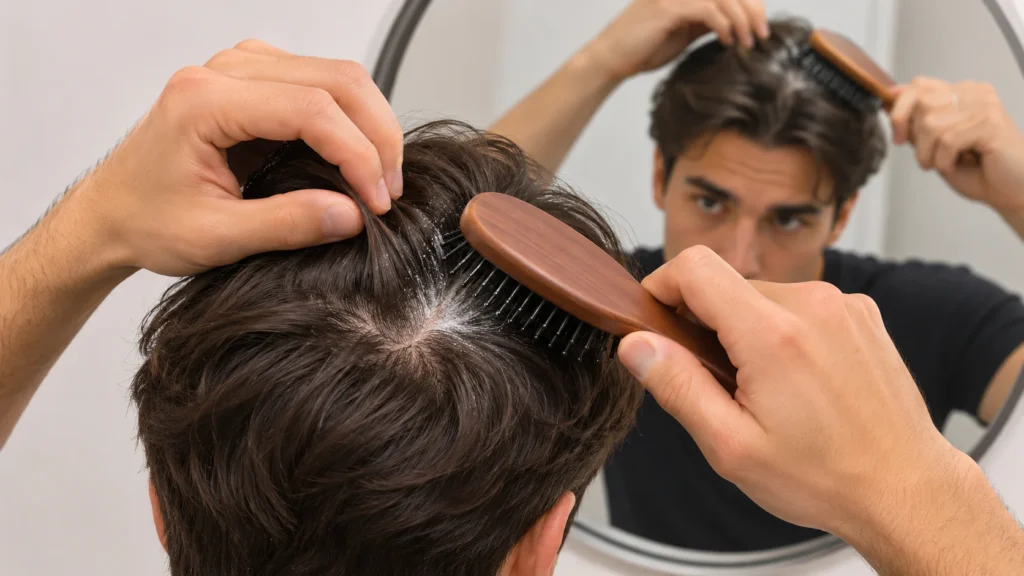
Troubleshoot the finish
- White patch at the part:Stop adding powder. Gently work the existing product through nearby roots, then brush or comb and inspect again.
- Dusty appearance across several sections:Use a clean brush to work through the roots and lift away visible excess. If it persists, consider washing instead of applying another layer.
- One oily area remains:Separate that section and apply a small amount there only. Distribute it before deciding whether you need more.
- Powder clumps or is hard to spread:Pause and check the package directions and applicator. Rework or remove the product rather than adding more on top.
Illustrative example: refresh only the crown
Suppose the crown looks oily but the sides and lengths look fine. Part the crown into a few narrow sections, apply a small amount at the roots of the affected areas, and leave the rest untreated. Work the powder through with your fingertips, brush the roots, then check the crown and part in ordinary light. If a pale spot remains, blend or brush it away; do not automatically repeat the application over the whole head. This is a qualitative example, not a measured dose: the amount depends on the powder, dispenser and your hair.
If you regularly need more dry shampoo to disguise oil, or the finish remains unsatisfactory, washing may be a better choice than building up layers. For broader advice on choosing a wash-day product, see TheTopZone’s shampoo Top Picks. The linked guide is for product selection; this guide focuses on applying powder and responding to visible residue, not on prescribing a wash schedule or promising the same finish for everyone.