





How to Clean and Care for Ankle Weights
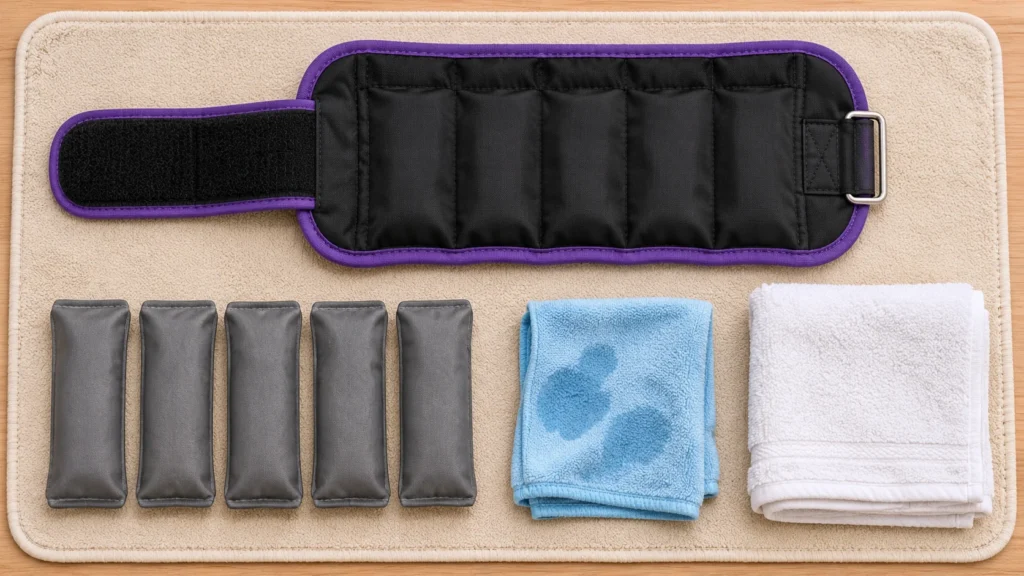
Ankle weights collect sweat and skin oils where the cuff touches your leg, but cleaning them like ordinary laundry can damage fabric, straps or weighted inserts. The safest routine starts with the product’s own care label or manual. If those instructions are missing, use a cautious, low-moisture approach and avoid soaking the weights until you know how their inserts are constructed.
This guide covers fabric cuffs and removable inserts, including what to do after a workout, how to dry the parts and when to stop using a damaged cuff. For help choosing a pair in the first place, see TheTopZone’s ankle-weight Top Picks.
Check the construction before cleaning
Read the care tag or manual before applying water or cleaner. Look for whether the whole cuff can be washed, whether its weight bags come out, and whether the manufacturer specifies hand-washing, machine-washing or a particular drying method. These distinctions matter: water that is acceptable for an outer fabric may not be suitable for the weighted inserts or their seams.
Materials differ across products. Henkelion describes its adjustable ankle weights as having a cotton shell and removable weight bags, but its supplied product information does not give cleaning instructions. That description helps identify parts; it is not permission to machine-wash or immerse them. Check the instructions for your own pair. Henkelion’s product information describes that construction.
For a different example, the Sunny Health & Fitness ankle-weight manual says to hand-wash its product in cold water and lay it flat to dry. Follow that instruction for the model covered by the manual, not automatically for other brands or designs. Read the Sunny ankle-weight manual.
- Removable bags: Find out whether the manual says to remove them before cleaning, and whether it gives separate care directions for the shell and inserts.
- Fixed or unclear filling: Do not assume the cuff can be submerged. Choose a gentle surface-cleaning method unless the manufacturer says otherwise.
- Care-label conflict: If the tag and manual appear to disagree, contact the manufacturer rather than guessing.
Clean the cuff gently
For routine sweat or a small mark, start with the least aggressive method: wipe the outside and inside with a clean cloth that is damp, not dripping. If the care instructions allow cleaner, use a small amount of mild soap diluted in water on the cloth. Test an inconspicuous area first, then dab or wipe the affected fabric without scrubbing hard. Use a second cloth dampened with clean water to remove soap residue.
Keep moisture away from openings, closures and seams where it might reach the filling. Do not use bleach, solvents, stain removers or hot water unless the manufacturer specifically permits them; the supplied sources do not establish that these are safe across ankle-weight materials. Avoid twisting or wringing a wet cuff, which can stress seams and straps.
If the manual for your exact pair allows hand-washing, follow its stated method. For example, the Sunny manual specifies cold water and hand-washing, followed by flat drying. Do not treat that model-specific direction as a universal washing rule. If a cuff is heavily soiled and you cannot confirm whether it is washable, contact the maker before immersing it.
Handle removable inserts separately
Remove weight bags only if the design allows it and the instructions support doing so. Keep track of which insert belongs where, and inspect each bag for leaks, tears, corrosion or damaged closures before putting it back. Do not wash an insert just because the outer cuff is washable: its fill and casing may need different care.
If the insert has a washable exterior, use only its specified cleaning method. Otherwise, use a barely damp cloth for a light surface wipe only when that seems appropriate for its material, then dry it completely. Do not open a sealed insert or attempt to clean loose filling. If you see leakage or cannot tell whether a bag is intact, stop using it and ask the manufacturer about replacement or disposal.
Illustrative example: A cuff has a fabric shell and removable bags, but its instructions say only that the shell is hand-washable. Remove the bags if the design permits, wash the shell by the stated method, and leave the bags out of the water. Since no insert-cleaning method is provided, do not soak or scrub them; ask the manufacturer if they need more than a careful surface wipe. The material description alone does not establish how those inserts tolerate water.
Dry every part completely
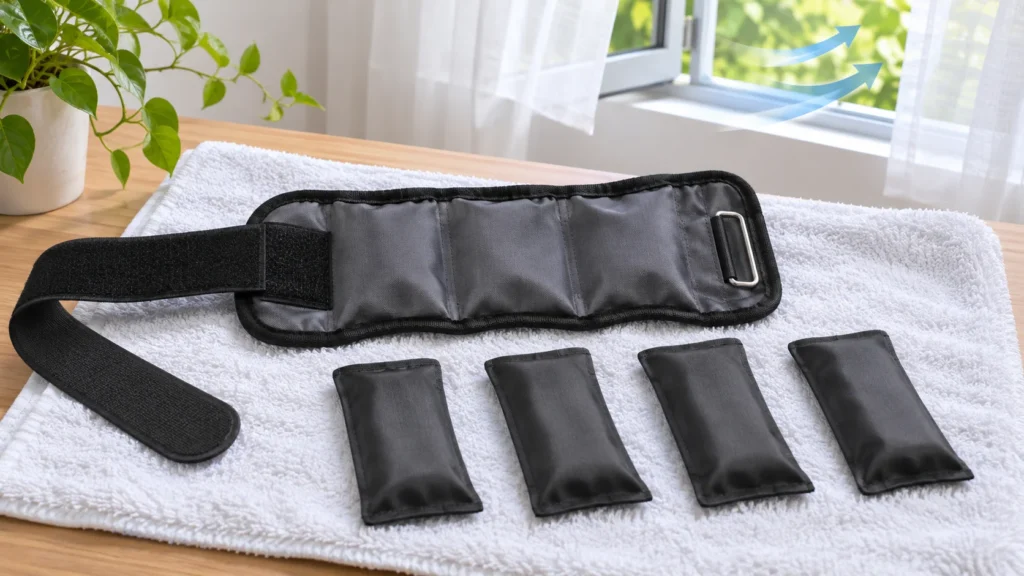
After cleaning, press the cuff gently between clean towels to lift moisture; do not wring it. Lay it flat in a well-ventilated place, reshaping it so the strap and seams are not folded under tension. Keep it away from direct high heat, heaters and a clothes dryer unless the product’s instructions specifically allow those methods. The Sunny manual directs owners of that model to lay the product flat to dry.
Dry removable inserts separately if they became damp, following their own instructions. Do not put them back into a cuff while either part feels cool or damp: trapped moisture can leave the assembly wet inside. Check seams, pockets and closures before reassembling. If any part remains damp, continue drying rather than storing or wearing it.
Prevent odor and wear between cleanings
After use, open the cuff and let it air out before putting it away. If it is sweaty, wipe it with a clean, lightly damp cloth when the materials allow, then let it dry fully. Avoid leaving used cuffs in a closed gym bag, a damp bathroom or another humid place. The Sunny manual recommends avoiding extremely damp storage conditions for its product; as a practical precaution, keep other weights dry too, while following their own storage instructions.
Store the weights uncompressed, with straps laid flat and removable bags kept together. Avoid placing heavy objects on top of them or leaving them in extreme heat or cold. These habits do not replace the maker’s directions, but they can help limit avoidable moisture and strain on the closures.
Inspect before the next workout
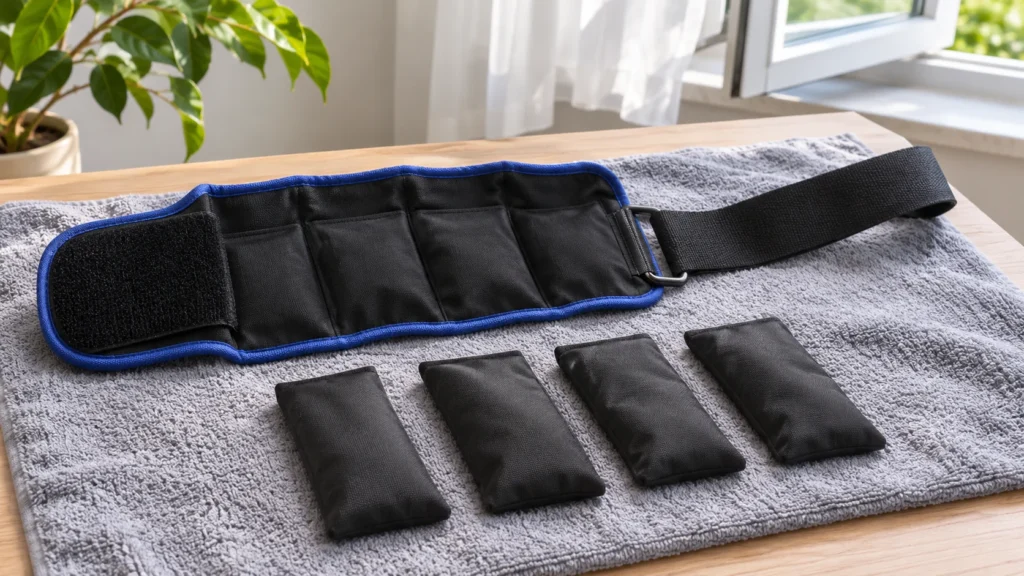
Before wearing a cuff, check the fabric, seams, strap and fastener. Look for a tear, loose stitching, a closure that no longer holds, or a weight bag that is leaking or misshapen. A damaged cuff or insert should not be put back into use until the manufacturer advises that it is safe to do so or supplies a suitable replacement. The Sunny manual also tells users to check equipment condition and not use it if it is worn or damaged; that is guidance from its manual, not a warranty statement for every product.
If an unpleasant smell remains after cleaning and complete drying, or if the cuff develops a stain, discoloration or damaged area, do not escalate to stronger chemicals without checking the care instructions. Contact the manufacturer with the model name and a description of the problem. The right method depends on the actual materials and construction; there is no single wash cycle that can be assumed safe for every ankle weight.