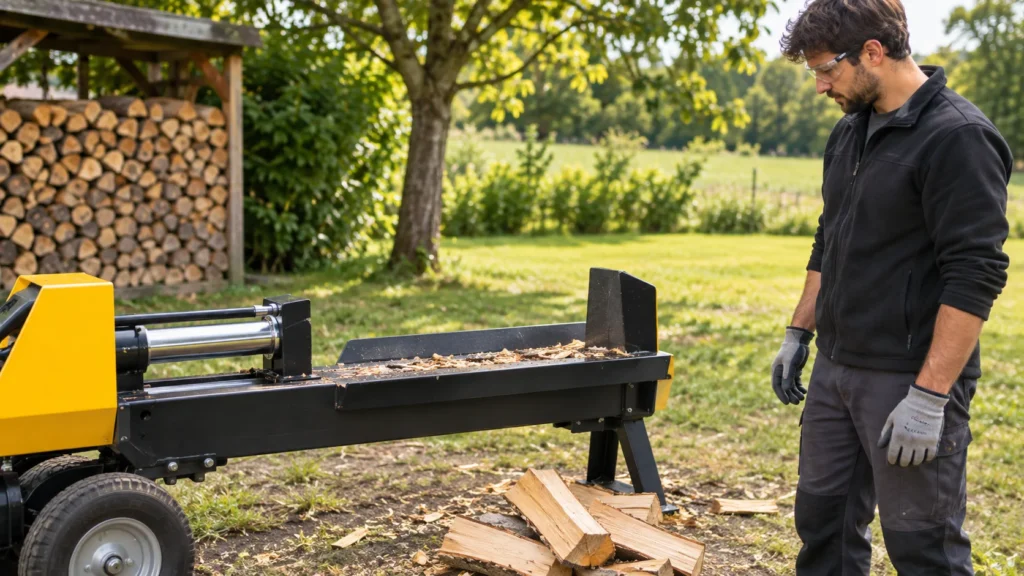





How to Start, Operate, and Shut Down a Log Splitter Safely
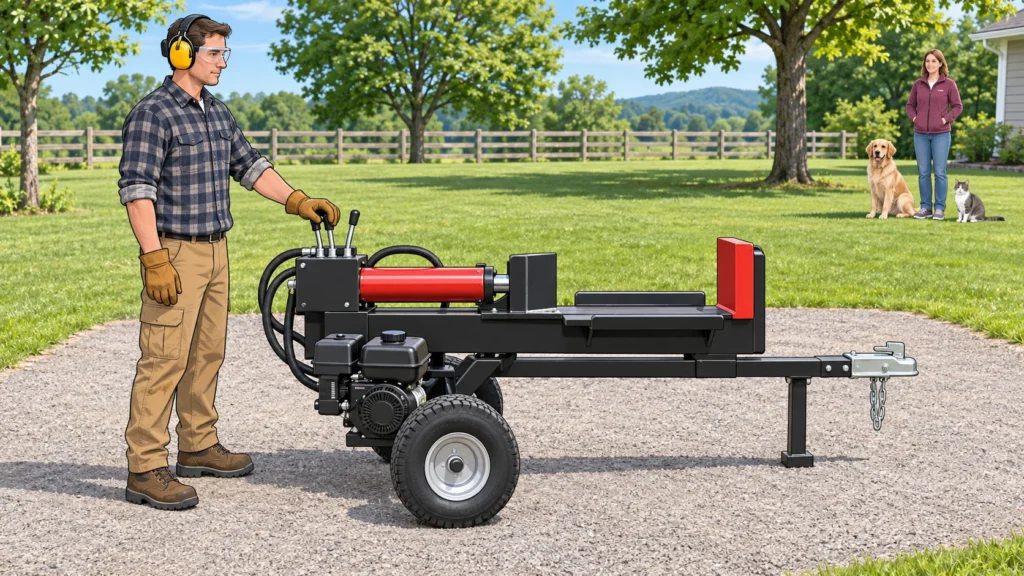
A safe splitting routine starts before you turn a key or pull a starter cord: identify the controls, set up the machine, inspect it, and clear the work area. During splitting, keep to the operator position specified by the manufacturer and never reach into the moving ram or wedge area. Shut down before handling a stuck log, clearing debris near moving parts, or refueling. This guide focuses mainly on powered splitters; a manual or kinetic model may have different hazards and controls. For model-specific steps, use its operator’s manual—not a generic starting sequence.
If you are still deciding what kind of splitter fits your work, see TheTopZone’s log splitter Top Picks. Once you have a machine, its own manual and safety decals take priority over any general routine here.
1. Prepare the site and machine
Choose a firm, level place with good lighting and enough room to work without stepping over the machine. Clear loose split wood, branches, and other trip hazards. Keep children, pets, and bystanders away from both the splitter and the area where split pieces may fall. The BlueBird LS34 manual calls for a level surface, clear work area, intact guards, and a single trained operator. These are checks to confirm against your own manual, not a substitute for it.
Wear the protective equipment required by your manual. BlueBird specifies eye, hearing, and hand protection, protective footwear, and avoiding loose clothing; check the manual for your machine’s requirements and ensure protective equipment does not interfere with controls. Keep hair, jewelry, and loose garments away from moving parts. Do not operate if you are tired or impaired, or if you have not learned the controls.
Before starting, inspect the machine while it is off. Look for damaged hoses, leaks, loose or missing hardware, damaged guards, and parts that appear insecure. Check engine oil, hydraulic fluid, fuel, wheels, or other items only as directed by the manual; not every splitter uses the same power source or has the same checks. Do not run a machine that appears unsafe. The BlueBird manual, for example, directs users to check that the machine is serviceable and that guards and protection plates are in place.
For a gasoline-powered machine, work outdoors. Engine exhaust contains carbon monoxide, and the BlueBird manual warns against running its engine indoors or in a confined, poorly ventilated area. Keep fuel away from flames and sparks; stop the engine before refueling and clean up spills before starting. If you are using an electric splitter, follow its instructions for power connections and keep the setup appropriate for that model.
2. Start it using the model’s instructions
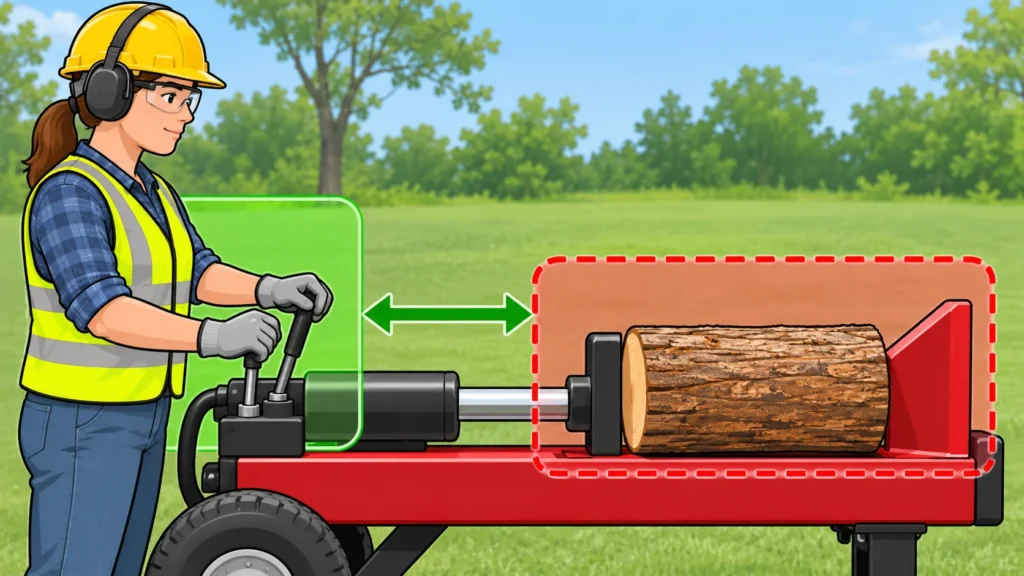
Stand in the designated operator zone, with the work area clear, before starting. Confirm that you know how to stop the machine and release or disengage the control before you begin. Use the starting order, control positions, and warm-up instructions in the operator’s manual. Choke, fuel valve, throttle, and switch arrangements differ, so a sequence from another splitter may be wrong for yours.
A manufacturer’s general article about gas-splitter starting describes a typical cold-start sequence for some machines, including setting a choke and throttle, starting the engine, and adjusting the choke as it runs. Treat those as examples of model-dependent controls, not universal settings; verify each step in your exact model’s manual.
If the machine does not start, behaves unexpectedly, or shows a leak or abnormal movement, stop and consult the manual or an authorized service provider. Do not bypass guards or alter controls to make it run.
3. Load and split one log at a time
Use only logs within the size and type limits specified for your splitter. Set each piece as the manual directs, with its ends supported and the piece positioned squarely in the splitting area. Keep hands and clothing out of the wedge, ram, and pinch zones. Follow the maker’s instructions for any log cradle or retaining feature rather than improvising a way to hold a piece.
Operate the control from the designated position and stay alert while the ram is moving. Split one log at a time unless your specific manual explicitly says otherwise. Do not adjust, add, or remove a log while the wedge or ram is moving. If a piece shifts, jams, or does not split, release the control and stop the machine; use the manual’s procedure for clearing it. Never reach into the splitting area to free a stuck log while the machine is running. The BlueBird manual specifically warns against adding, removing, or freeing logs while its wedge is moving.
Keep the work area tidy as you go, but pick up split pieces only when the machine is no longer moving and it is safe to do so. Pause if people or animals enter the area. Do not leave a powered splitter running unattended. The specific stop control and safe pause procedure depend on the machine’s design.
Illustrative example: check position and limits
Suppose your machine is a Landworks GUO079. Its product information lists horizontal-only operation and a maximum log length of 20.5 inches. That means you should not attempt a vertical setup or feed a longer log into that model; it does not establish safe dimensions for another splitter. Check your own model’s manual and ratings before loading. See the GUO079 product information.
4. Stop before clearing or adjusting
Release the operating control and wait until the ram or moving parts have stopped before touching a log, clearing debris near the mechanism, or making an adjustment. If the machine needs service, follow the manual’s shutdown and isolation steps. For engine-powered equipment, the BlueBird manual says to remove the spark-plug wire before service; that instruction is specific to its engine setup, so use your own manual’s method rather than assuming all machines disconnect the same way.
If a hose is damaged, fluid is leaking, a guard is missing, or the machine moves unexpectedly, do not continue working. Shut it down using the maker’s procedure and get qualified help where needed. Do not attempt an improvised repair while the machine is operating.
5. Shut down and leave it safe
Finish the current cycle, release the control, and wait for the moving parts to stop. Then use the shutdown sequence in the manual, including the correct engine switch or electrical disconnect for your model. Do not assume every machine has the same fuel valve, emergency stop, or ram-return procedure. Never leave an engine running unattended.
Before cleaning, servicing, or moving the splitter, follow the manual’s instructions for stopping and securing it. Pick up split wood and debris after operation to reduce trip hazards. If storing an engine-powered machine, let the engine cool before storage and keep the machine away from open flames. The BlueBird manual also gives fuel-storage instructions for its LS34; storage and fuel procedures can differ by engine, so check your manual for the correct steps.
A dependable routine is simple: clear the site, inspect the machine, start it as directed, keep clear while splitting one log, stop before handling a problem, and shut down by the book. If a step in this guide conflicts with the instructions for your exact model, follow the manufacturer’s manual and contact the maker or dealer when something remains unclear.