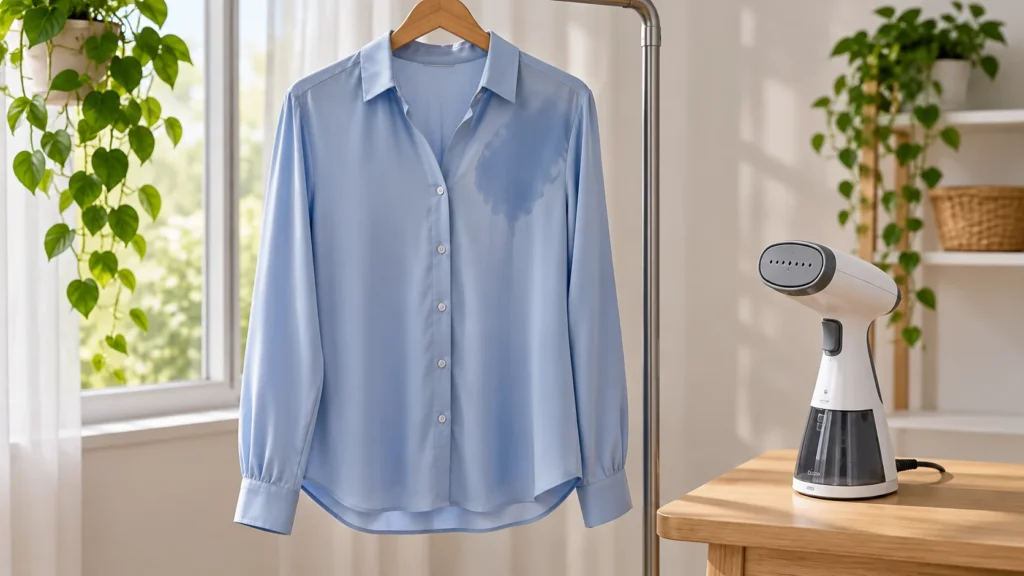





How to Steam Clothes Safely Without Spots or Scorching
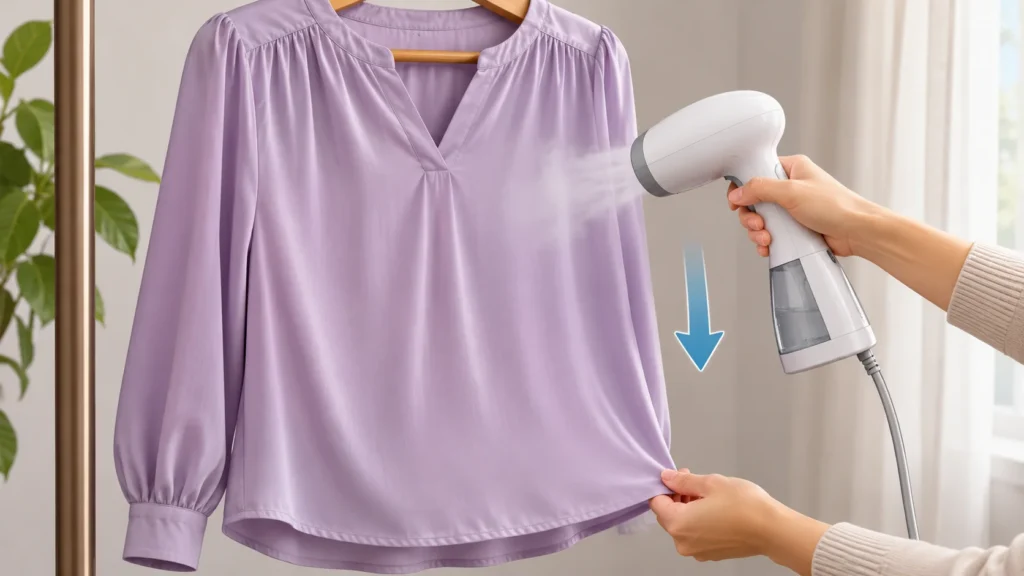
A garment steamer can loosen wrinkles, but heat and moisture can still mark or damage fabric. The safest approach is to check the garment first, get the steamer ready away from the clothing, and work in short, controlled passes. If the care label or steamer manual gives different instructions from general advice, follow the instructions for your specific garment and appliance.
Check the garment before steaming
Read the care label before filling the tank. If it says not to steam, or gives a special care instruction, do not assume that a cautious technique makes steaming safe. Some materials and finishes react unpredictably to heat or moisture. Leather, suede, waxed items and fabrics that may melt are examples that a general clothes-steaming guide advises against steaming; when in doubt, use the garment maker’s care guidance or ask a professional cleaner. wikiHow’s garment-steamer guide also advises checking the label and treating uncertain fabrics cautiously.
Check for visible stains, loose threads, buttons, pins and delicate decoration. Steam is for relaxing wrinkles, not removing every stain; a stain may need appropriate treatment before heat is applied. If the label permits steaming but you are unsure how the fabric or dye will respond, test a hidden area first. Stop if the test changes the colour, texture or shape. A test can reduce uncertainty, but it cannot guarantee that the whole garment will respond identically.
For silk, chiffon, velvet, prints, embroidery or other delicate surfaces, use the garment’s care instructions as your guide. Where the garment permits it, turning it inside out can help protect its visible surface. Do not apply one distance or setting to every fabric: follow the appliance manual, and start conservatively rather than assuming all steamers behave alike.
Prepare the steamer and work area
Set up somewhere stable, with room to hang the garment and move the steamer without pulling its cord. Keep the hot nozzle pointed away from yourself, other people and pets. Use a sturdy hanger and make sure the garment hangs freely. Clear the pockets and remove items that could snag or be affected by heat or moisture.
Fill the tank as its manual directs, using the type of water the manufacturer recommends. Wait for the appliance’s ready signal; do not assume that the same warm-up time applies to every model. If the instructions permit it, direct the first steam away from the garment and into a safe area to check that the output is steady. Keep hands out of the steam path: steam can burn even when the nozzle does not touch skin. If the unit spits water, leaks, smells unusual or behaves unexpectedly, switch it off and follow its manual rather than continuing over clothing.
Water spots can have several causes, including droplets from a sputtering steamer or moisture collecting on the cloth. The practical response is to avoid aiming an unsteady stream at the garment, keep the nozzle at the distance specified for that model and fabric, and use brief passes. A fabric-care guide recommends testing first, keeping the steamer moving and increasing distance for delicate items, but its distance suggestions are general advice—not a substitute for your appliance’s instructions. Its guide to steaming delicate fabrics explains why heat and moisture can still affect them.
Steam in controlled passes
- Hang and steady the garment. Let it hang naturally. If the fabric needs gentle tension, hold its lower edge with a hand well away from the nozzle and steam path. Do not pull delicate knitwear or stretch a garment to force out wrinkles.
- Start with a hidden or less noticeable area. Use the setting and nozzle position allowed by both the garment care instructions and steamer manual. Move on only if the test area looks and feels unchanged.
- Work in sections. Move the steamer in smooth, downward strokes, avoiding long pauses in one spot. Let steam do the work; pressing hard against the cloth is unnecessary. For delicate or embellished fabric, keep an appropriate gap and take a lighter approach. The general technique guide describes downward strokes and extra care with delicate fabrics, but the safe distance depends on the garment and appliance.
- Pause if droplets appear. Pull the steamer away. Check whether the output has settled and whether the nozzle or fabric is wet before continuing. Do not rub a water mark or add more heat automatically; let the area air-dry and reassess.
- Finish without handling the hot head. Switch off and set the appliance down as directed by its manual. Keep it on a stable, heat-safe surface or its designated rest, if supplied. Avoid leaving it where someone could brush against the nozzle or pull the cord.
Illustrative example: You want to remove creases from a silk blouse, but its label allows only cautious care. Check the steamer manual for silk guidance; test an inside seam; then use the permitted gentle approach, keep the head moving and stop at the first sign of spotting or texture change. If the label or manual does not support steaming, do not proceed. The example does not mean every silk dye or finish will tolerate steam.
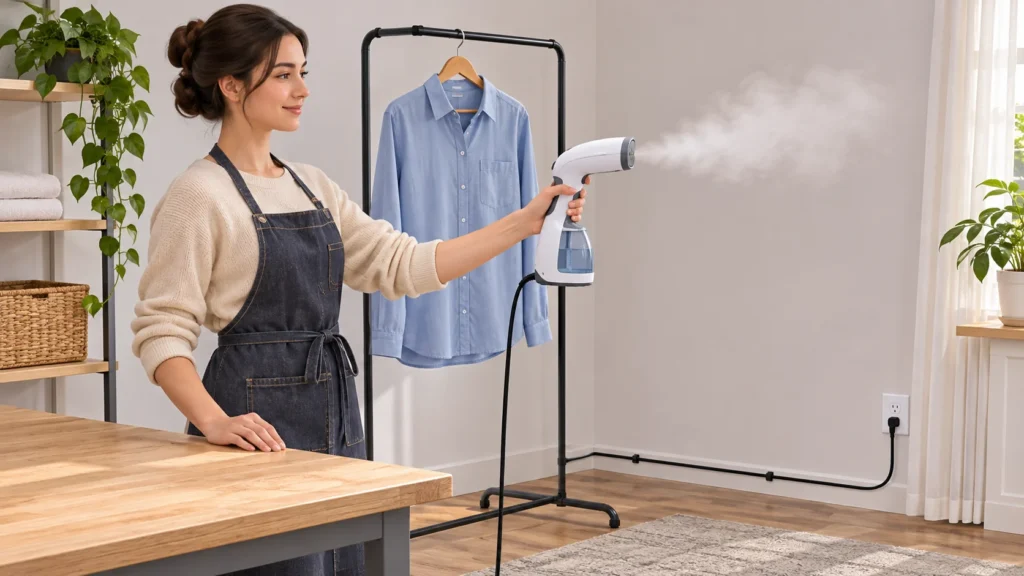
Let the garment dry and check it
After steaming, leave the garment hanging in an airy space until it is dry before wearing or putting it away. Do not treat a fixed drying time as universal: fabric thickness, how much moisture it received and room conditions vary. Check for damp patches, spots or changes in texture before storing. If a mark remains, pause and consult the care label or a suitable cleaner rather than repeatedly steaming the same area.
Results also vary by garment. A steamer may relax wrinkles, but it is not a reliable way to create a sharp crease or replace every kind of pressing. If you need a defined crease, or the garment’s care instructions call for a different method, choose that method instead. For help choosing among steamer formats and features—not technique—see TheTopZone’s garment steamer Top Picks.
Care for the steamer after use
Turn the unit off and let it cool before emptying or cleaning it. Follow the model’s manual for draining, descaling and cleaning; do not pour vinegar or another cleaner into the tank unless the manufacturer specifically allows it. Some manufacturers recommend particular water or maintenance routines, and advice for one device should not be treated as universal. Emptying and drying the tank when the manual calls for it can help prevent leftover water from sitting in the appliance. Store the cooled steamer safely, with the cord arranged so it cannot be pulled or tripped over.
If steaming causes colour transfer, a new mark, a change in texture or an unusual smell, stop. Switch off the appliance if it is behaving abnormally, and do not continue to apply heat in an attempt to fix the result. Recheck the garment label and appliance instructions; for a valuable or delicate item, seek garment-specific professional advice.