





How to Adjust Buckwheat Fill in a Meditation Cushion
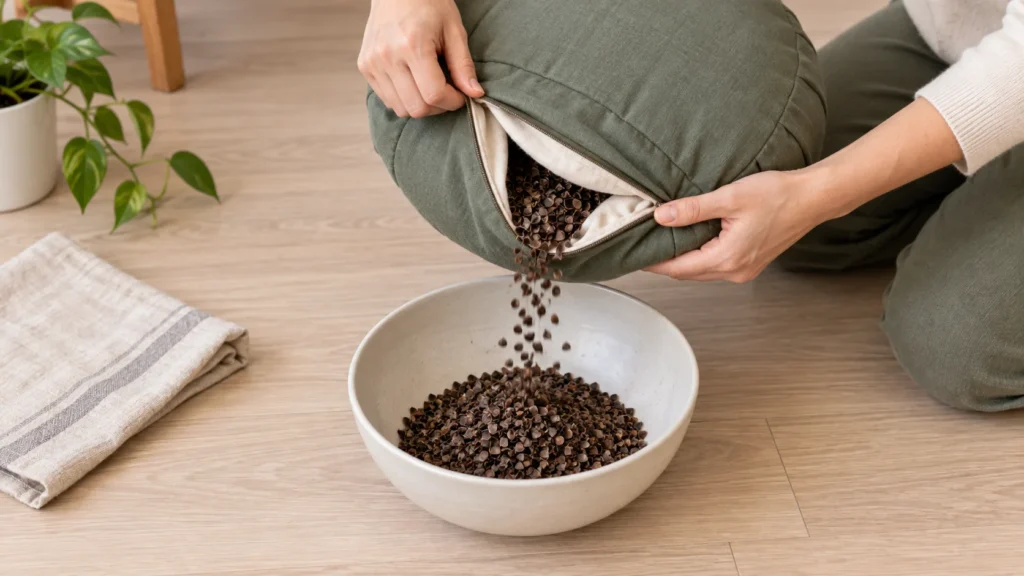
Buckwheat hulls can be shifted or removed to change how a meditation cushion feels, but adjustment is only possible if the cushion has an opening that gives access to its filling. A removable outer cover alone does not prove the inner fill is adjustable. Check for an inner liner with a zipper or other closure before opening anything; if you cannot confirm that the hulls are contained behind a proper opening, do not cut or force a seam.
This guide explains a cautious, gradual approach. The goal is to find a seat that feels stable and comfortable for you—not to reach a universal height or firmness. People vary in body proportions, sitting position and comfort. If floor sitting causes persistent discomfort, changing fill may not be the only useful adjustment.
Check that the cushion is adjustable
Look at the product’s care label, instructions or model-specific manual first. If those are unavailable, inspect the cushion without pulling at seams. An adjustable model should have a designed opening into the compartment that holds the hulls. Some cushions have a removable cover and a separate inner liner; others may not provide a user-accessible fill opening at all. A zipper on the cover may only remove the cover.
Do not assume all buckwheat-filled cushions can be refilled or adjusted. A cushion roundup describes the Retrospec Sedona as having an inner compartment for adding or removing hulls, but that is not a manual and does not verify every version. Check the opening and instructions for your exact cushion before acting.
If the cushion has no confirmed fill opening, keep the cover intact. Ask the maker whether the liner is meant to be opened, or use the cushion as supplied. Do not substitute other materials or mix fillers unless the manufacturer specifically says that is appropriate.
Prepare for a tidy adjustment
Buckwheat hulls are small and can scatter easily. Work on a clean, dry surface away from fans, open windows and pets. Put a wide, stable bowl or container beside the cushion to catch the hulls. A second clean, sealable container is useful for storing excess. Keep children away from loose fill, and avoid pouring hulls near food, drink or an open drain.
Make sure the opening is fully accessible and that you can close it securely afterward. If the inner liner is damaged, its zipper is stuck, or the construction is unclear, stop rather than risk a spill. A general cushion-refilling guide describes adding or removing fill through an accessible opening; treat it as general advice, not a substitute for instructions for your cushion.
Before changing anything, sit on the cushion as you normally would. Notice whether the issue is mainly height, firmness, uneven support or the way the cushion’s shape fits your position. That observation helps you make one small change at a time instead of removing a large amount and having to guess how to restore it.
Remove hulls gradually
- Open the intended fill compartment. Keep the cushion over the catch container and open the inner closure carefully. Avoid shaking or tipping the cushion abruptly.
- Take out a small amount. Use your hand or a clean scoop to transfer hulls into the container. There is no universal amount to remove: cushion size, fill level and preference differ.
- Close and test. Secure the inner closure before sitting. Use the same seat, posture and floor surface you used for the first test, then notice whether the change helped.
- Repeat only if needed. If the cushion still feels too high or too firm, remove another small amount and test again. Keep the excess until you are satisfied with the result.
Removing fill usually gives the remaining hulls more room to shift. That can change both the cushion’s height and how firmly it supports you. Those effects are related but not identical, so judge the whole seat rather than assuming less fill will feel only softer. Stop if the cushion collapses, feels unstable, or no longer supports your preferred sitting position.
Add hulls with care
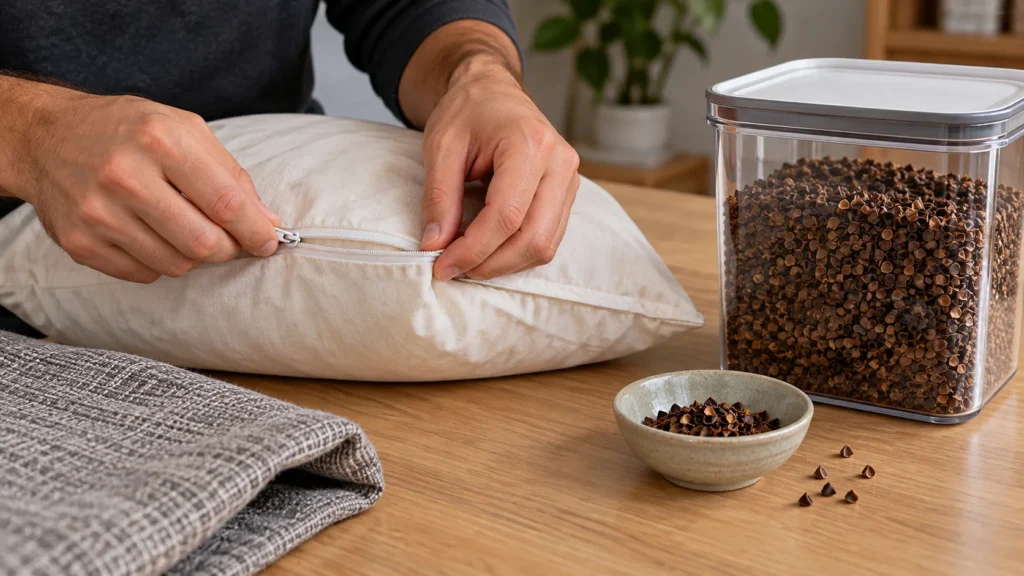
If the cushion feels too low or does not provide the support you want, add a small amount of compatible buckwheat hulls only if the maker allows it and you have confirmed the correct fill type. Use clean, dry hulls intended for cushion filling; the supplied sources do not establish that any particular replacement hull product is suitable for every cushion. Do not overfill the compartment or force its zipper closed.
After adding a little, close the liner and sit-test before adding more. A cushion packed too tightly may have little room for the hulls to move and conform to your sitting position. If the closure strains, the cushion becomes difficult to shape, or the seat feels uncomfortably rigid, remove some fill rather than forcing it.
Never pour hulls directly from a large bag into a narrow opening if doing so makes spills likely. Transfer a manageable quantity to a bowl or scoop first. Keep the opening directed over the catch container, and close the inner compartment before moving the cushion.
Test the result in your usual position
Use the cushion in the posture and setting where you normally meditate. Check whether it feels stable, whether you can settle into your chosen position, and whether the height and firmness are comfortable for you. Try a few ordinary position changes, since hulls may shift as you sit. If the cushion tilts, feels lumpy or no longer supports you evenly, redistribute the hulls by gently shaping the cushion; if that does not help, adjust the amount in another small step.
Do not treat a generic height target as a rule. A position that feels workable for one person may not suit another, and cushion shape, floor surface and sitting style affect the experience. Make changes based on your own comfort, and stop if an adjustment makes sitting feel worse.
Illustrative example: Suppose your cushion feels too high in your usual cross-legged position, but you are unsure whether to remove much fill. Open the confirmed inner compartment over a bowl, take out a small handful, close it, and test in the same position. If the seat feels more suitable and remains stable, stop and store the rest. If it still feels too high, repeat with another small amount. The handful is an example of a cautious step, not a measured amount or product-specific recommendation.
Store excess fill and close up
Put unused hulls in a clean, dry, sealed container so they do not spill or pick up household dust. Label the container with the cushion it came from, and keep it somewhere dry and out of children’s reach. If your cushion’s manufacturer gives different storage or care instructions, follow those instead. The supplied sources do not provide a verified storage life or a universal cleaning method for hulls, so do not assume the fill can be washed or stored indefinitely.
Before returning the cushion to use, check that the inner closure is fully shut and that no hulls are caught in the zipper. Refit the outer cover according to its care instructions. If hulls have spilled, gather them carefully rather than pushing them into seams or leaving them where someone could slip on them.

When not to adjust
Do not open a cushion if you cannot identify a designed fill opening, if the inner liner is torn, or if the maker says the fill is not user-adjustable. Do not cut fabric, force a closure, or add a different filling to solve a fit problem. For a model with unclear construction, contact the manufacturer with the exact model name or label details. If you are comparing adjustable designs for a replacement, see TheTopZone’s meditation cushion picks and verify adjustment details for the exact model before buying.
Fill adjustment is a practical way to personalize some buckwheat cushions, not a guarantee of comfort or a fix for every seating issue. Make small, reversible changes, keep excess hulls contained, and let your own stable, comfortable sitting position guide the result.