





How to Fix Light Leaks and a Slipping Sleep Mask
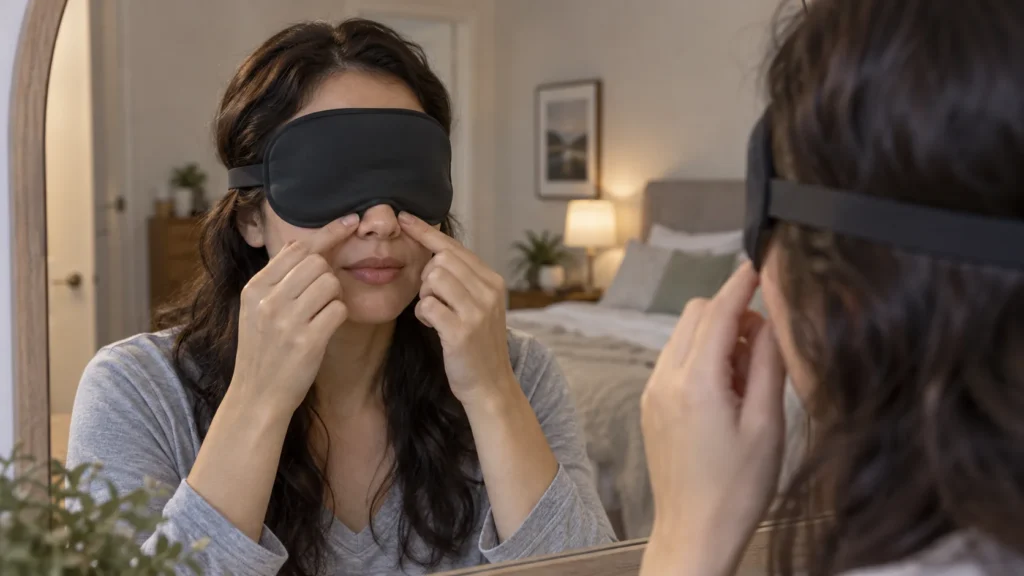
A sleep mask that lets in light or slides out of place usually needs a fit adjustment—not simply a tighter strap. Start by identifying where the gap appears, then reposition the mask and make small changes to the tension. If it still leaks or shifts when you lie down, the mask’s shape or strap design may not suit your face or sleeping position.
This guide covers ordinary sleep masks, not CPAP or other prescribed breathing-treatment masks. Those devices have different fitting requirements: follow the exact equipment instructions and ask your sleep team or equipment provider for help with persistent leaks. CPAP leak guidance explains why a treatment-mask leak should be identified and addressed according to the specific equipment and care plan.
Find the gap before adjusting
Put the mask on as you normally would, but don’t immediately pull the strap tighter. Check whether light enters at the nose, along the cheeks, near the temples, or around an edge that has shifted. A visible gap can help distinguish a placement problem from a mask shape that may not match your face. A sleep-mask fitting guide also suggests checking the nose, temples and cheeks and reassessing fit while lying down; use this as a troubleshooting method, not a guarantee that every mask can make a light-tight seal on every face. Read the sleep-mask fitting guide.
- At the nose: Check whether the mask’s nose cutout, flap or padded edge sits in the position intended by its maker. A gap here may remain even when the strap feels snug.
- At the temples or cheeks: Look for an edge that lifts, or one side that sits differently from the other.
- After turning your head: The mask may be shifting against your pillow, rather than leaking because it was positioned badly while sitting up.
- Unevenly across the face: Check whether the mask is centered and whether the strap is adjusted evenly on both sides.
Notice where the gap appears before changing anything. That gives you a point of comparison after repositioning and helps avoid tightening the whole strap to solve a problem confined to one edge.
Reposition before tightening
Take the mask off and put it back on in your usual sleeping position. Center it over your eyes, then line up its nose section according to the mask’s design. A mask can sit too high or too low, leaving a gap or putting an edge in an uncomfortable place. Follow the product’s instructions if it has a nose flap or shaped eye cups; designs differ, so don’t assume a flap should be folded or a padded section reshaped unless its instructions say so.
Next, fasten the strap at a comfortable starting tension. The goal is for the mask to stay where you place it without painful pressure. Make one small adjustment at a time and check the same spot again. If moving the mask slightly changes the leak, placement was likely part of the issue. If you cannot close the gap without pulling uncomfortably, don’t keep tightening: the mask’s shape may not suit your nose or face.
Check the mask lying down, too. A fit that seems satisfactory while sitting may change when your head meets the pillow. Try your usual sleeping position, then turn your head as you would during the night. Avoid pressing or pulling on a feature in a way the manufacturer does not describe.
Adjust strap tension without overtightening
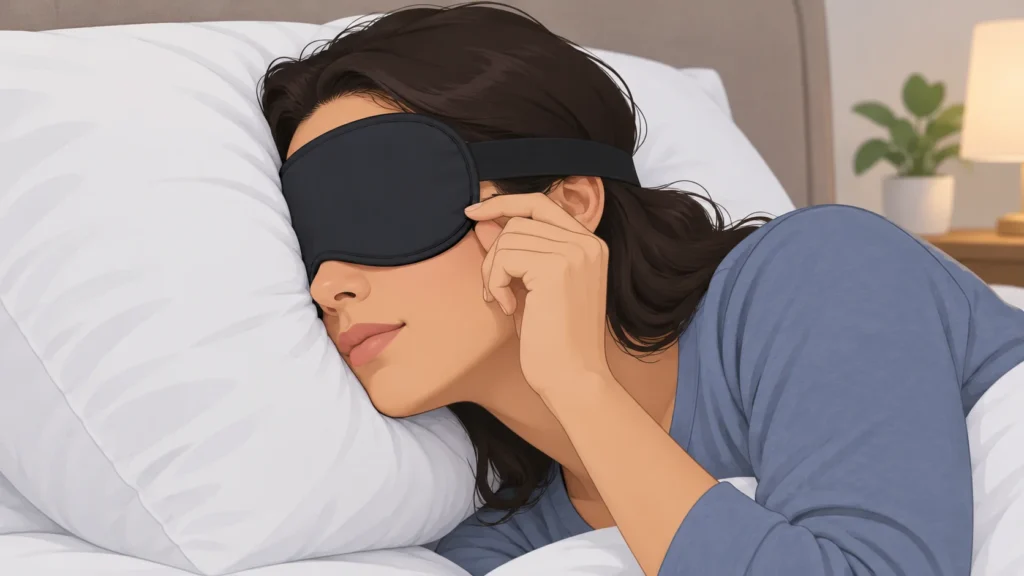
A strap that is too loose may let the mask drift, but a very tight strap can feel uncomfortable and may pull the mask out of position. The sleep-mask fitting guide cautions against treating more tension as the automatic fix for displacement. Its advice on strap tension and mask movement is general guidance; the fit and adjustment method for a particular mask depend on that model’s instructions.
- Set the mask in the right position before fastening it.
- Adjust both sides of an adjustable strap evenly, if the design allows.
- Lie down and turn your head as you would in bed; check whether the mask shifts.
- If it moves, make a small tension adjustment and repeat. Stop if the strap feels painful or pulls the mask out of alignment.
Different strap designs distribute tension differently. If your mask has a broad strap, two straps, or a strap that routes around the ears, use its instructions rather than improvising a new routing. Don’t add a second strap just because another model uses one; first check that your current strap is centered, untwisted and adjusted as designed.
Troubleshoot nose and side gaps
If light leaks at the nose, first reposition the mask so its nose section sits where the maker intended. Test again while lying down. If the gap remains, look for a different shape or nose design rather than relying on extra strap pressure. Some masks use a nose flap or contoured edge; that does not mean every design will fit every nose the same way.
If light leaks at a cheek or temple, check whether the mask has slid sideways or is being pushed by your pillow. Recenter it and see whether a small, even strap adjustment helps. If the edge continues to lift in your normal sleeping position, the mask’s coverage or shape may be a poor match.
If the mask slips only when you turn, test it on your side as well as on your back. A position that seems secure while sitting or lying face-up may not stay put once a pillow presses against the mask. The fitting guide advises checking fit in the sleeping position rather than relying only on an upright adjustment. See the guide’s position-specific suggestions.
- Gap returns after turning: Recenter the mask in that position and check whether the pillow is pushing its edge.
- One side sits higher: Check that the mask is centered and the strap is not twisted or adjusted unevenly.
- More tension makes fit worse: Loosen slightly and reposition; don’t keep tightening against discomfort.
When adjustments don’t work
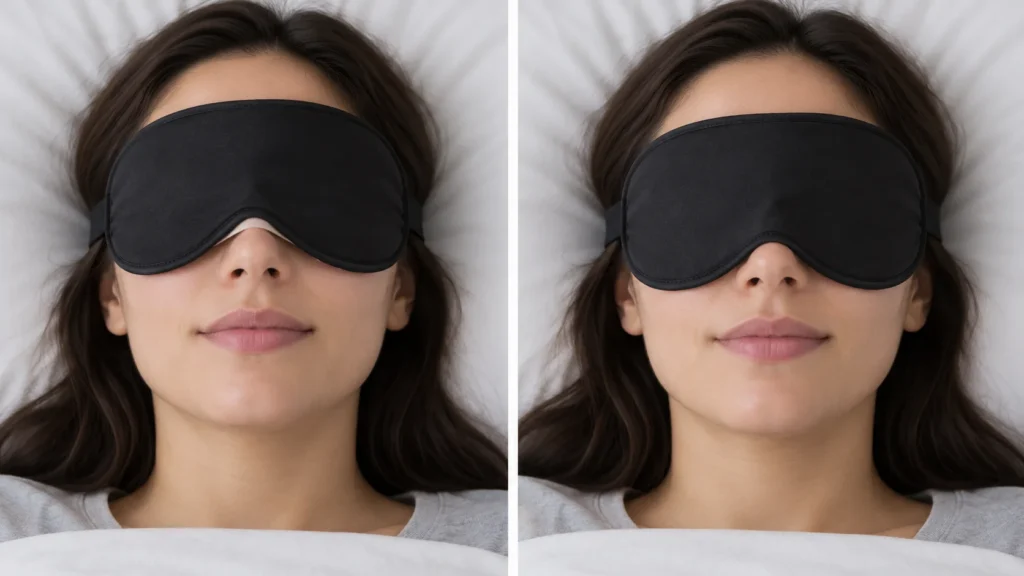
A persistent gap is useful information: the problem may not be strap tension. Faces vary, and masks with different eye shapes, nose coverage and strap layouts will not fit everyone alike. If a mask repeatedly leaks at the same point after careful repositioning, consider whether its shape covers that area appropriately before trying another style. If it slips even when the strap is comfortable and correctly fitted, consider whether its strap arrangement stays stable for your usual sleep position.
Don’t assume that a product description promising blackout or a particular fit will resolve your own leak. Use the maker’s instructions for the exact model to understand how its parts are meant to sit, and check the seller’s actual return terms before buying a replacement. Return windows, condition requirements and exclusions vary, so don’t rely on a general promise.
For options to compare, see TheTopZone’s sleep-mask picks. Treat product-by-product fit notes as starting points; your face shape and sleeping position still determine whether a particular mask works for you.
Illustrative example: nose leak or strap problem?
Example, not a universal fit test: A reader notices light at the nose while lying on their back. They recenter the mask and the gap improves; after turning onto their side, it returns, although the strap still feels comfortable. That pattern suggests checking both the nose section’s position and whether the mask shifts against the pillow. If another small, comfortable adjustment does not help, tightening further is unlikely to be a useful next step. The reader can consult the mask instructions or compare a different nose shape or strap design. This example does not establish that a specific design will fit.
Keep the fit check simple
Make adjustments in a repeatable order: identify where light enters, reposition the mask, adjust strap tension slightly, and retest in your usual sleeping position. Change one thing at a time so you can tell what helped. If the mask remains uncomfortable, presses painfully, or cannot stay in place without being overtightened, stop trying to force the fit. A different design may be a better practical choice.
For masks with special features—such as shaped cups, a nose flap, unusual strap routing or removable parts—follow that exact model’s instructions. General fit advice cannot establish how a particular mask is constructed or how its parts should be adjusted.